You See
Seams that never bonded
Likely Cause
Adhesive or primer applied too cold or on a damp surface during an earlier repair.
What We Do
We cut out the failed lap, dry and prime the area, and rebond it within the product limits.
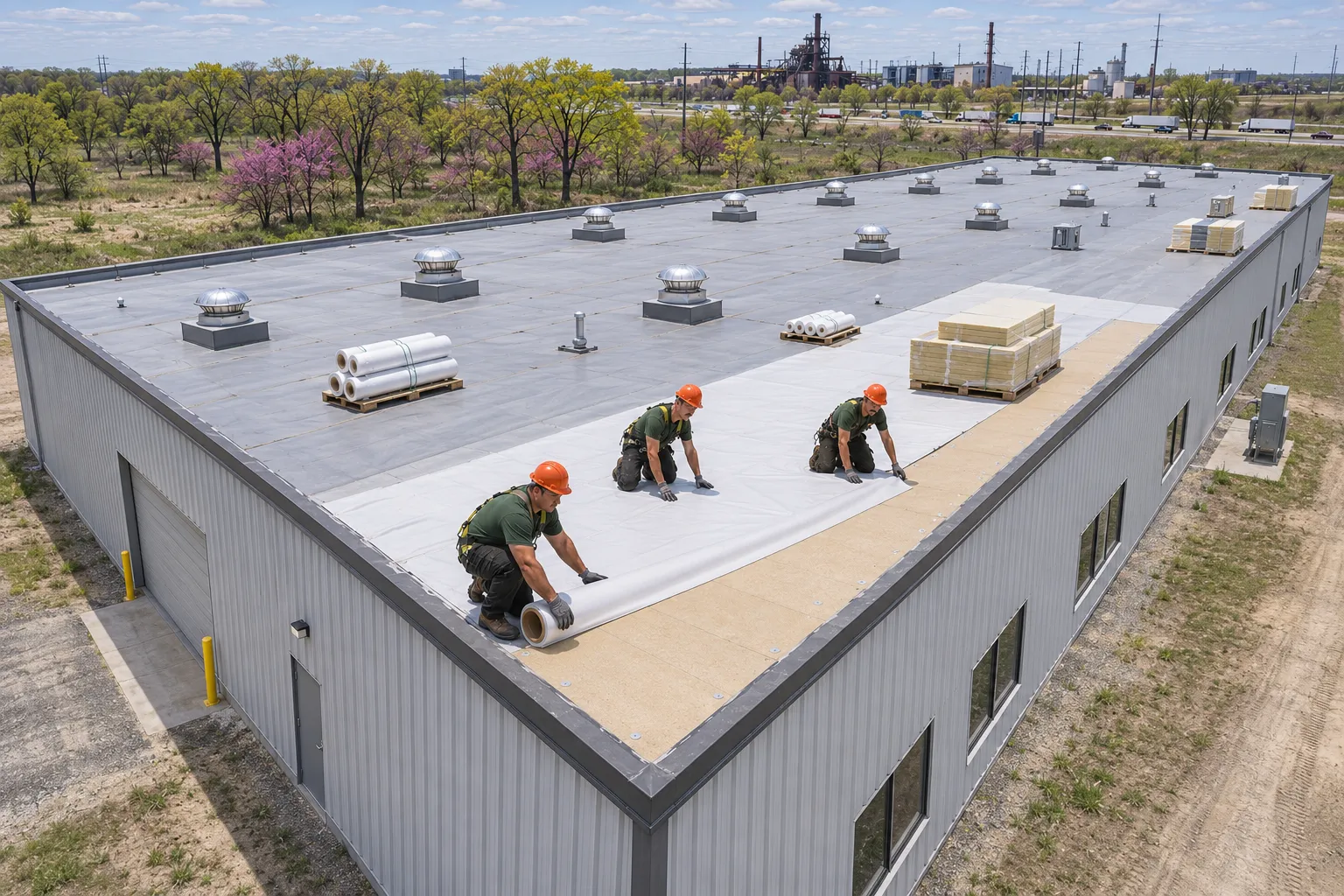
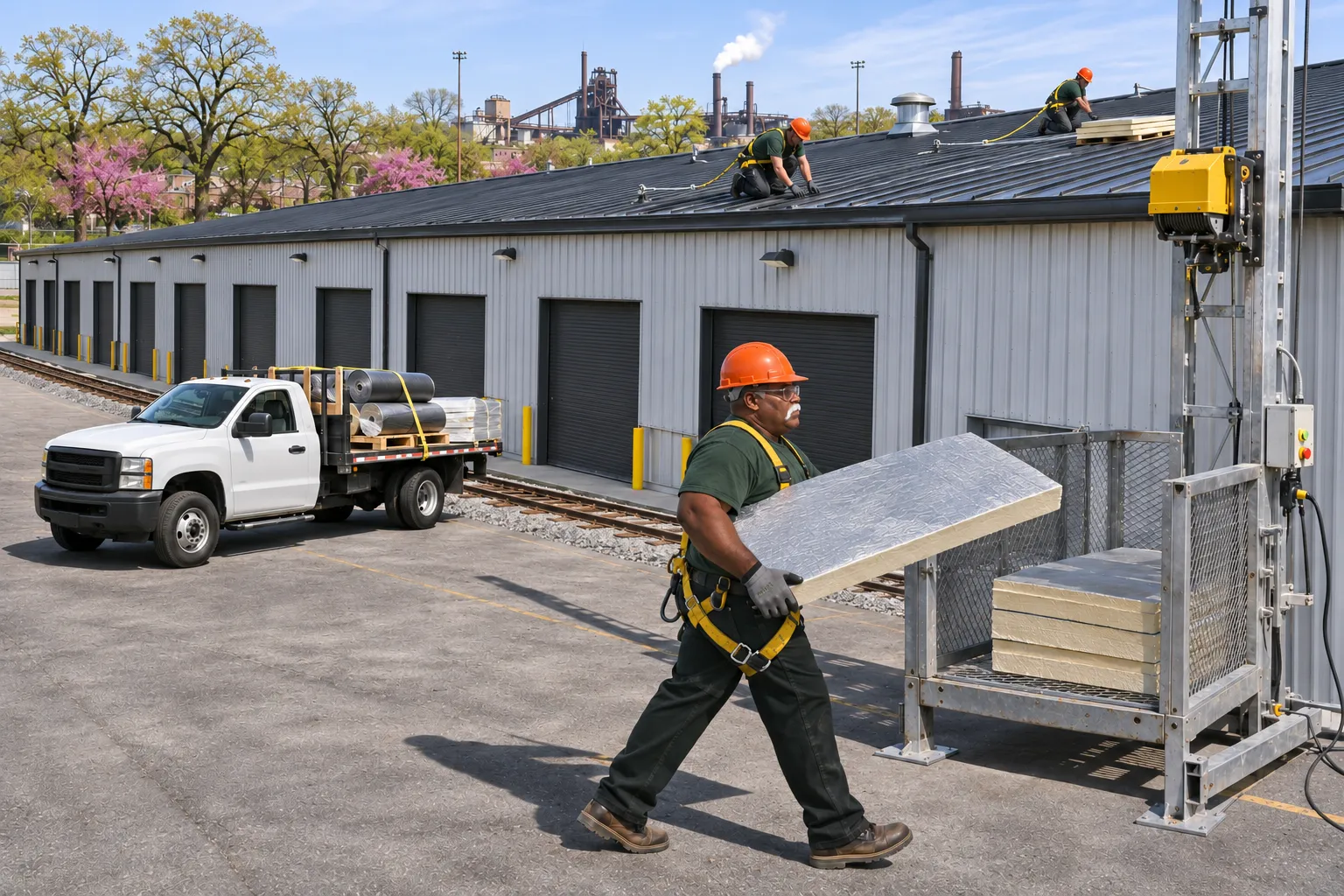
As a Chesterton commercial roofing contractor, we install TPO, EPDM, and metal roofs on retail buildings, offices, and industrial properties, scheduled around business hours and the weather.
Chesterton commercial roofing runs on weather windows: tear-off, adhesives, and primers each need conditions that change through the year.
Many adhesives and primers need surface and air temperatures above a set minimum, and every membrane bond needs a dry deck. Late spring through early fall gives the widest window for full tear-off and adhered sheets.
Winter still allows mechanically fastened sheets, metal panels, and repairs on dry days, so urgent work moves ahead while adhered work waits.
Several common problems here trace back to work done in the wrong weather.
Adhesive or primer applied too cold or on a damp surface during an earlier repair.
We cut out the failed lap, dry and prime the area, and rebond it within the product limits.
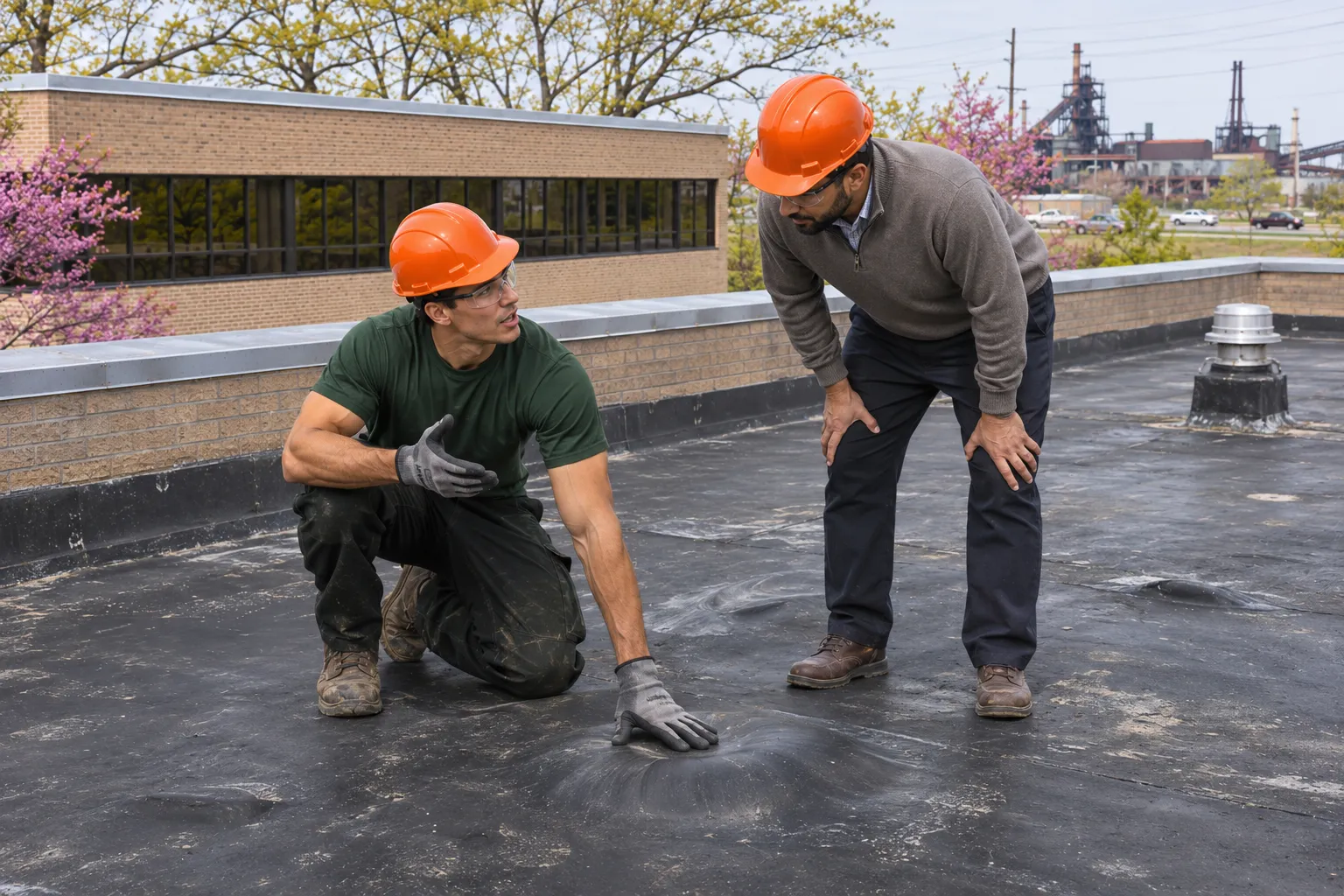
Moisture trapped under the membrane during install, swelling when the roof heats up.
Blisters are cut, dried, and patched; widespread blistering means a section gets replaced.
Water from melting snow finding flashing gaps that opened during freeze-thaw cycles.
Openings get a temporary seal in winter and a full repair once temperatures allow.
Curb flashing worn by heat and service, over tenant spaces that stay open year-round.
Curbs get reflashed on dry days, timed around store hours.
Patches laid over damp insulation in cold months, trapping water that later swells and sinks the area.
We core under old patches, replace wet boards in good weather, and rebuild the slope so water drains away.
Working with the seasons protects the roof you are paying for and the businesses below it.
Adhesives and primers applied inside their temperature limits reach full strength, so seams stay closed.
Planning tear-off for the widest weather window cuts the days a roof sits half open.
Scheduling around store hours and the season keeps loud work off busy shopping days.
Temporary seals and fastened repairs carry the roof through the cold, so one winter leak does not soak a whole section of insulation.
Each system has its own weather needs, which shape the schedule.
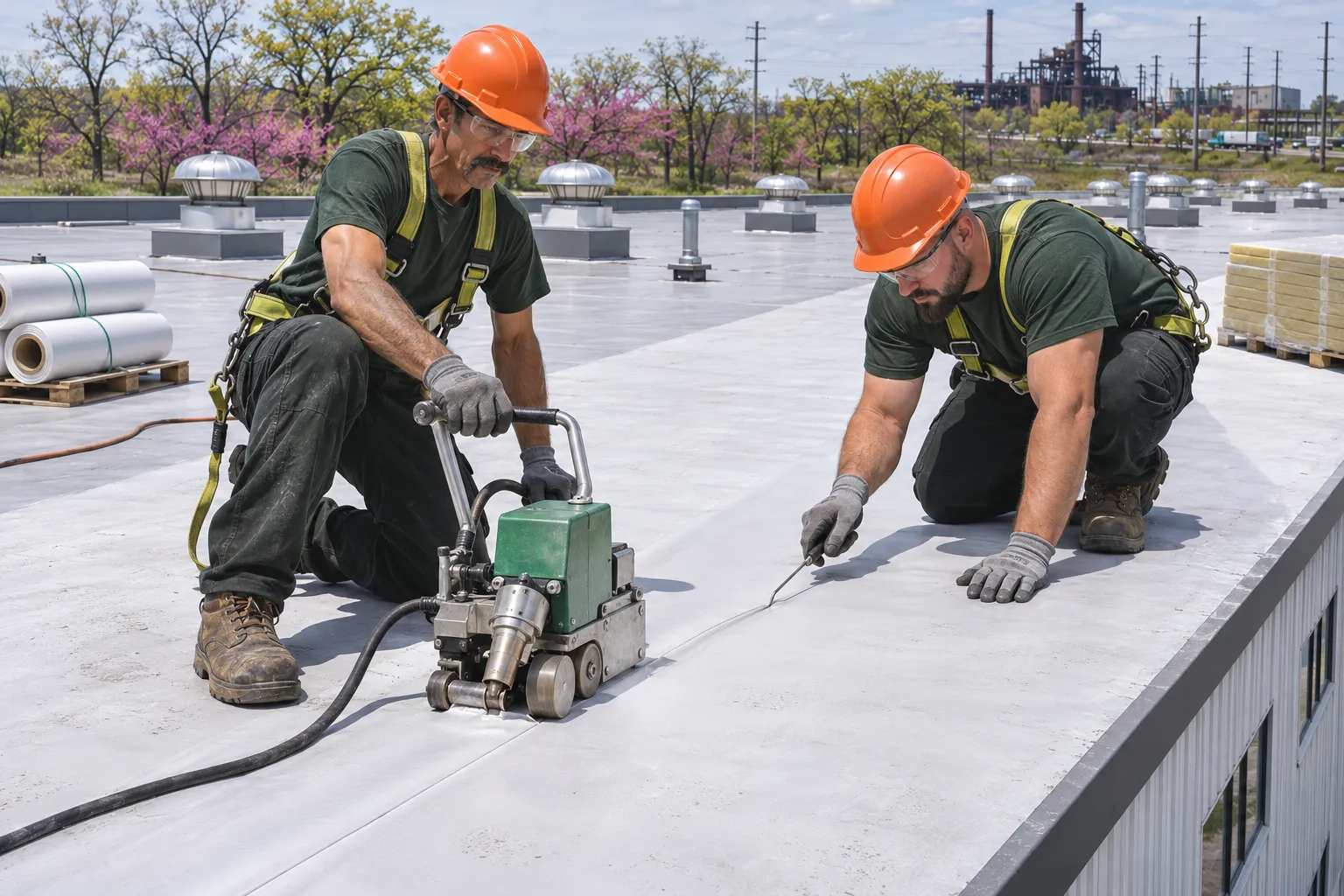
Welded white sheet that installs in cool weather when mechanically fastened.
TPO Roofing details →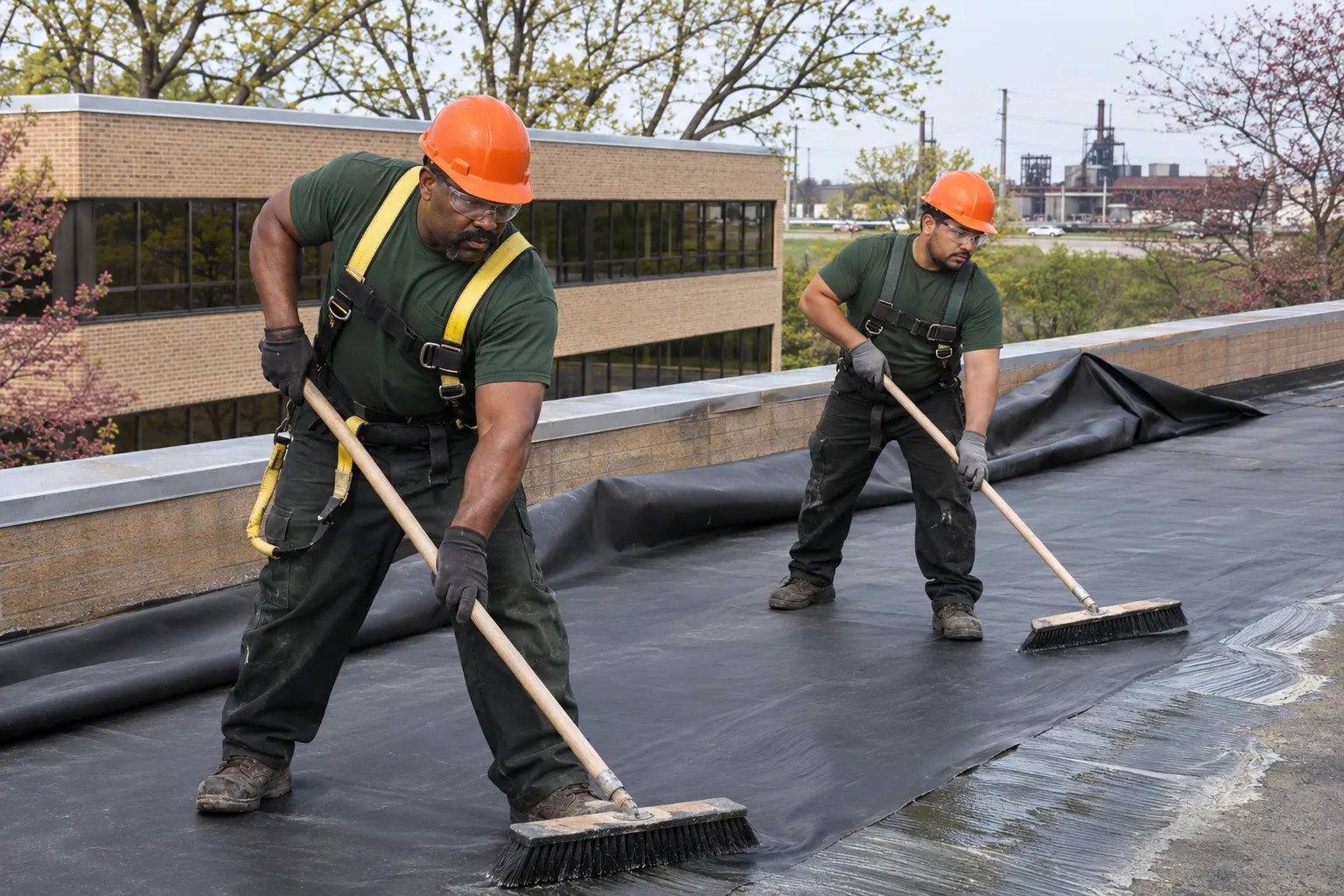
Rubber membrane whose adhesives and tapes are scheduled for dry, mild days.
EPDM Roofing details →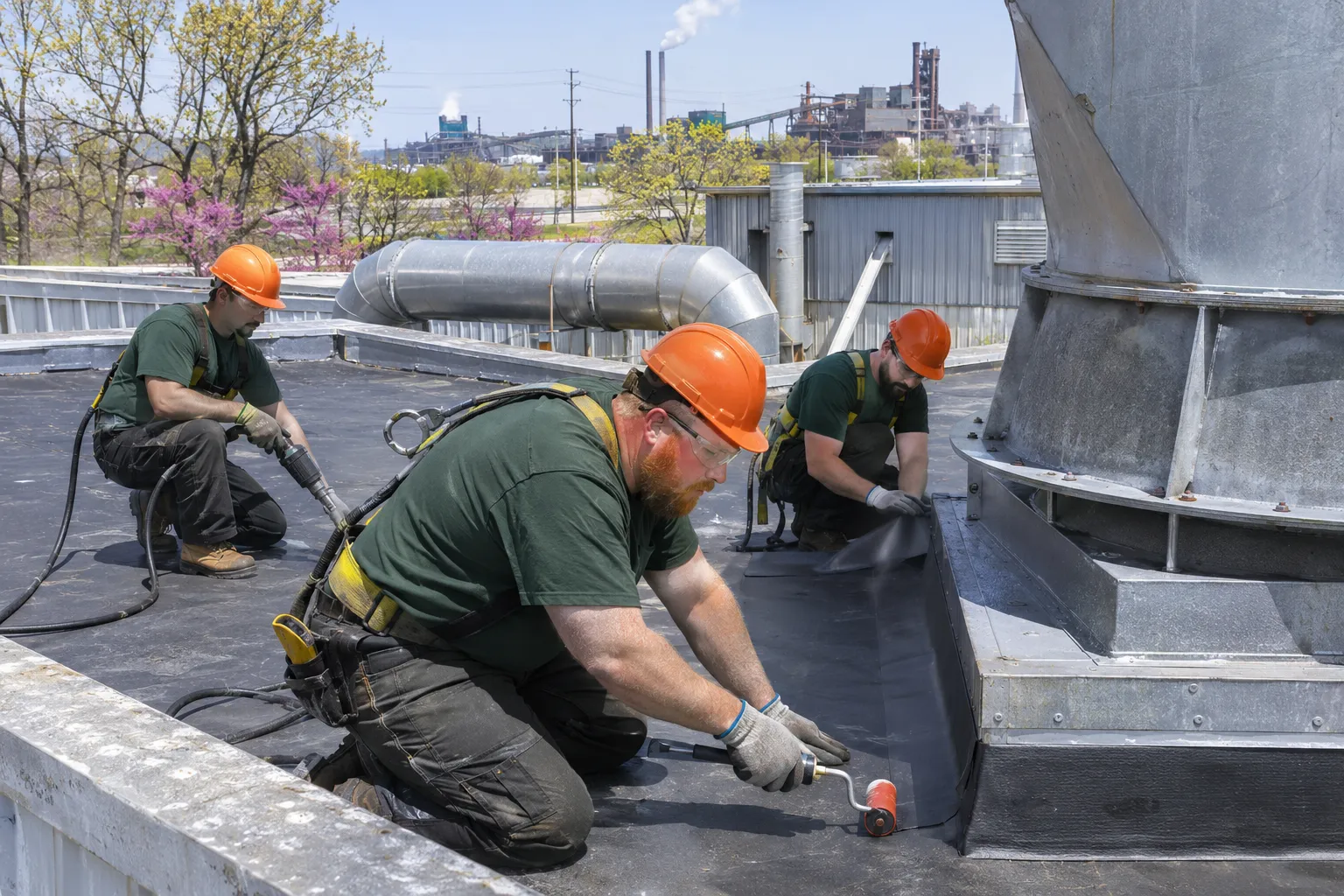
Plant roofs sequenced so winter work covers fastened sections first.
Industrial Roofing details →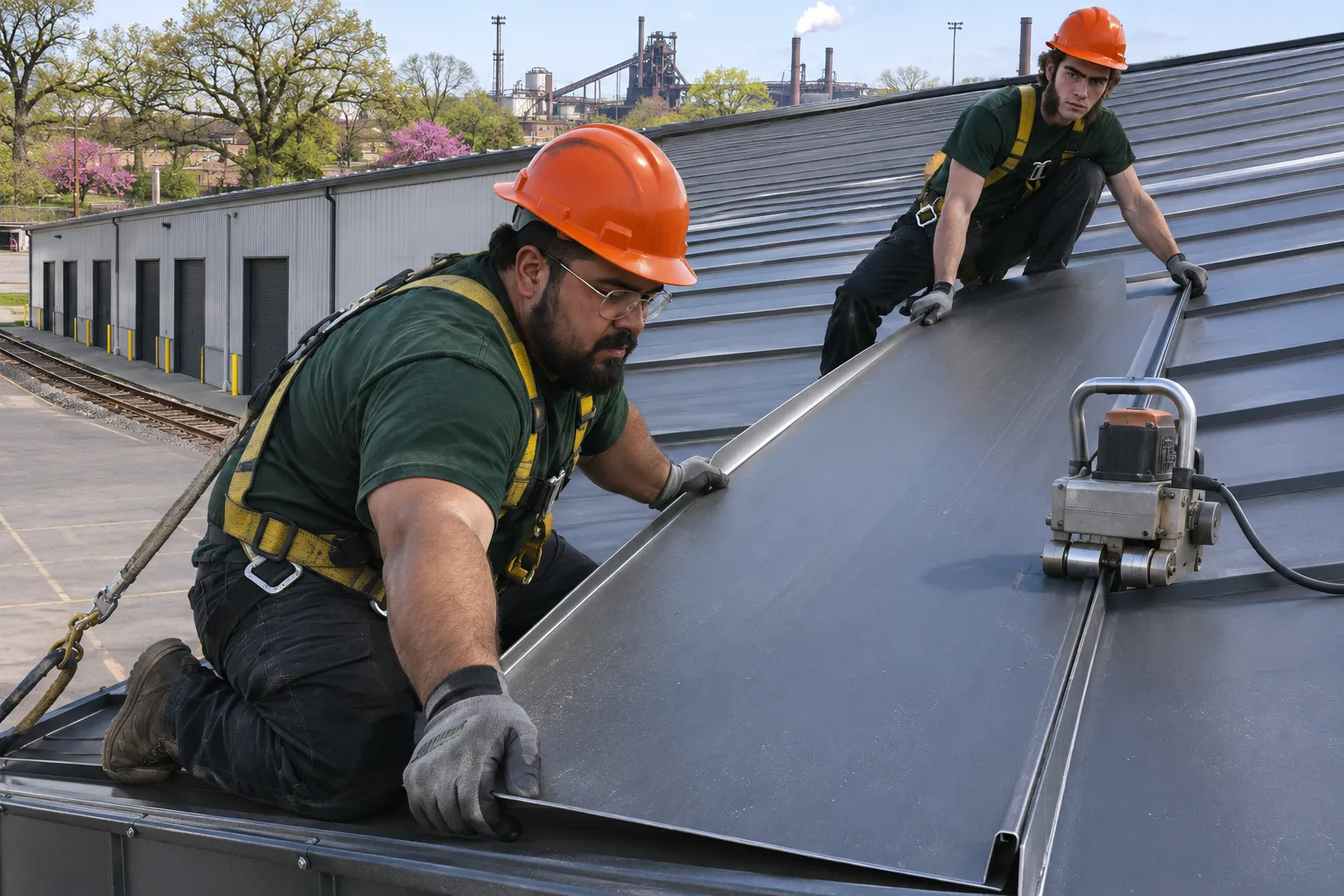
Metal panels that go on through most of the year on dry days.
Commercial Metal Roofing details →Call and describe where water shows inside. A temporary seal goes on now, and the full repair is booked for the first good weather.
Five stages, each set against the calendar and the forecast.
We core the roof, trace leaks, and sort work into what has to happen now and what can wait for better weather.
The written scope names the system, the season for each step, and the temperature limits for the adhesives and primers chosen.
Leaks that cannot wait get a temporary or fastened repair right away, so the building stays dry until the main work starts.
Tear-off and adhered work run when the deck is dry and temperatures sit inside product limits, one section per day.
Seams and laps are checked by hand once the adhesive has set, and the final walk covers every curb and edge.
Building in a neighboring town? We cover the ones below; anywhere else, call us or send us a message.
Yes, on retail buildings, offices, and industrial properties. TPO, EPDM, or metal is chosen from the slope, drainage, and equipment on the roof, and the work is planned around business hours and tenant needs.
Late spring through early fall gives the widest window for tear-off and adhered membranes. Fastened sheets, metal panels, and repairs can run in winter on dry days. Planning a spring or summer start means the scope and materials are ready before the first good week arrives.
Each adhesive and primer lists a minimum surface and air temperature on its product sheet, and all need a dry surface. We follow the manufacturer's limits for the product on your roof and move adhered work to a warmer day when they aren't met.
Ask for a written scope with the system, thickness, insulation, and flashing, plus a schedule that names the season for each step. Confirm licensing and insurance, and ask how the roof stays dry if weather stops the job.
Parts of it can. Fastened membranes and metal panels go on in cold weather on dry days. Adhered sheets and some primers wait for warmer temperatures. A roof can be split, with fastened sections done in winter and adhered details finished in spring.
Each day we only open what can be closed before quitting, and temporary seals tie the new roof to the old at the end of every shift. A sudden storm means the open edge is sealed first. Interior protection under any opened section stays in place until that section is closed.
Tell us when the leak started and how urgent it is. We will inspect the roof and put each step on the calendar.