Heat-Welded White Membrane Seams Built For Lake Wind And Summer Sun
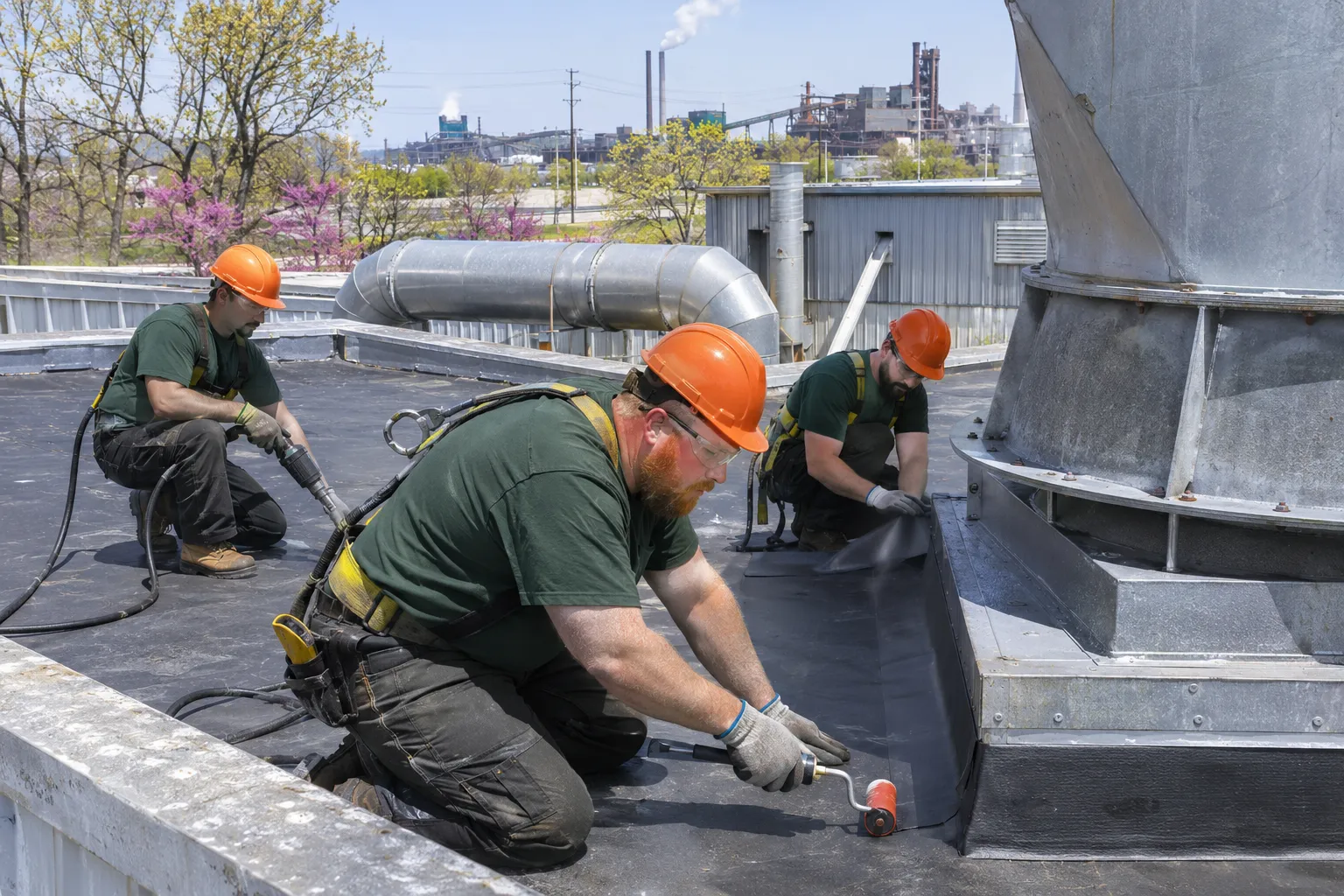
As a Portage TPO roofing contractor, we install heat-welded white TPO membranes on warehouses, retail centers, and offices, with every seam probed before we leave.
Portage TPO roofing works best on low-slope roofs with room to weld long seams. These lists sort the roofs where it fits from the ones that need work first.
TPO Fits Well When
The roof is low-slope with drains, scuppers, or gutters that work.
A white surface helps cool offices, stores, or cold storage below.
Rooftop units need service paths that walkway pads can cover.
Wide open fields allow long rolls and few seams.
Insulation is being replaced or added during the reroof.
Plan Other Work First When
The deck is soft, rusted, or sagging between joists.
Plant exhaust leaves oils on the roof that can attack the sheet.
Two roof layers are already down and must come off.
Steep sections call for metal panels instead of membrane.
Ponding comes from a structural sag that needs framing work.
Roof Symptoms
TPO Roofing Problems on Portage Buildings
TPO trouble almost always starts at a seam, a corner, or a puncture. These are the four we find most often.
SymptomLikely CauseWhat We Do
You See
Gaps along a welded seam
Likely Cause
Cold or rushed welding during install, or dirt left in the lap, leaves an edge that never fused and opens as the roof moves.
What We Do
We clean the lap, reweld it at the right heat and speed, and probe the seam run on either side.
You See
Punctures along service paths
Likely Cause
Dropped screws, tools, and boots grinding on a thin sheet near rooftop units, where technicians walk most.
What We Do
We patch with matching TPO, weld the edges, and lay walkway pads on the routes technicians actually use.
You See
Leaks at unit curbs and pipe boots
Likely Cause
Flashing that shrank or was never welded at the inside corners, where TPO is folded tightest.
What We Do
We reflash the curb with pre-formed corners and fresh membrane, then weld and probe every corner.
You See
Bruised spots after spring hail
Likely Cause
Hailstones crushing the insulation under the membrane, sometimes with no tear on the surface at all.
What We Do
We photograph the field, cut test cores at soft spots, and replace crushed boards along with the membrane above them.
System Choices
TPO Roofing Choices for Portage Port Warehouses
A TPO roof is more than the sheet on top. These four choices shape how long it lasts and how it handles lake weather.
Membrane Thickness
Thicker sheets resist punctures and weathering longer. We price two thicknesses on roofs with heavy foot traffic or equipment so you can compare.
Attachment Method
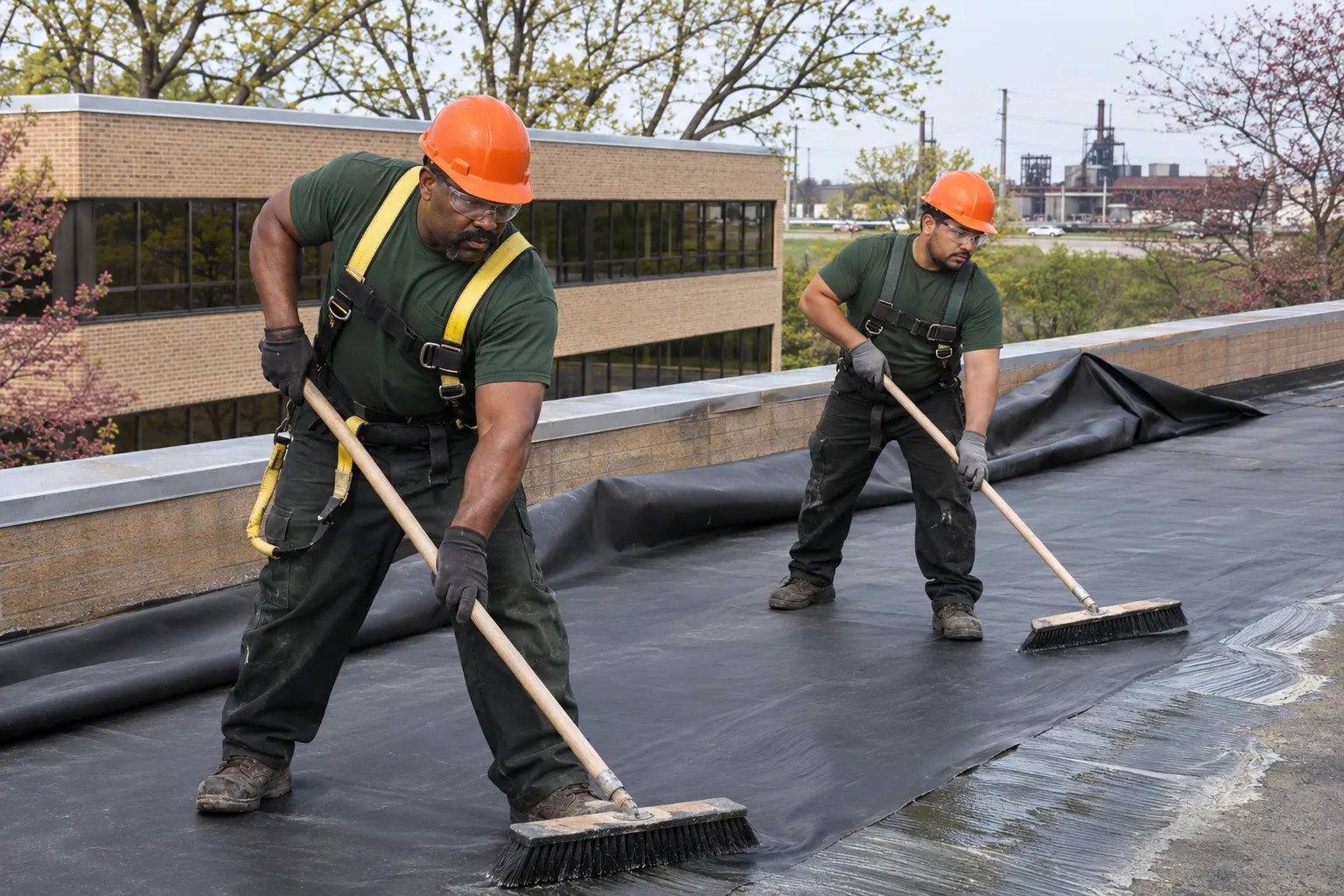
Mechanically fastened sheets go down fast over steel decks. Fully adhered TPO holds better at corners and edges facing wind off the lake.
Insulation And Cover Board
Polyiso boards set the R-value, and a cover board on top keeps foot traffic from crushing them. Tapered boards add slope toward drains.
Edge Metal And Termination
Perimeter edge metal, coping, and termination bars hold the sheet at the walls. We size them for the wind exposure at each building.
What You Gain
TPO Roofing on Portage Retail Centers And Offices
White TPO earns its place on buildings that run cooling all summer and see regular rooftop service.
Retail Centers
Offices
Port Warehouses
Cold Storage
Seams As Strong As The Sheet
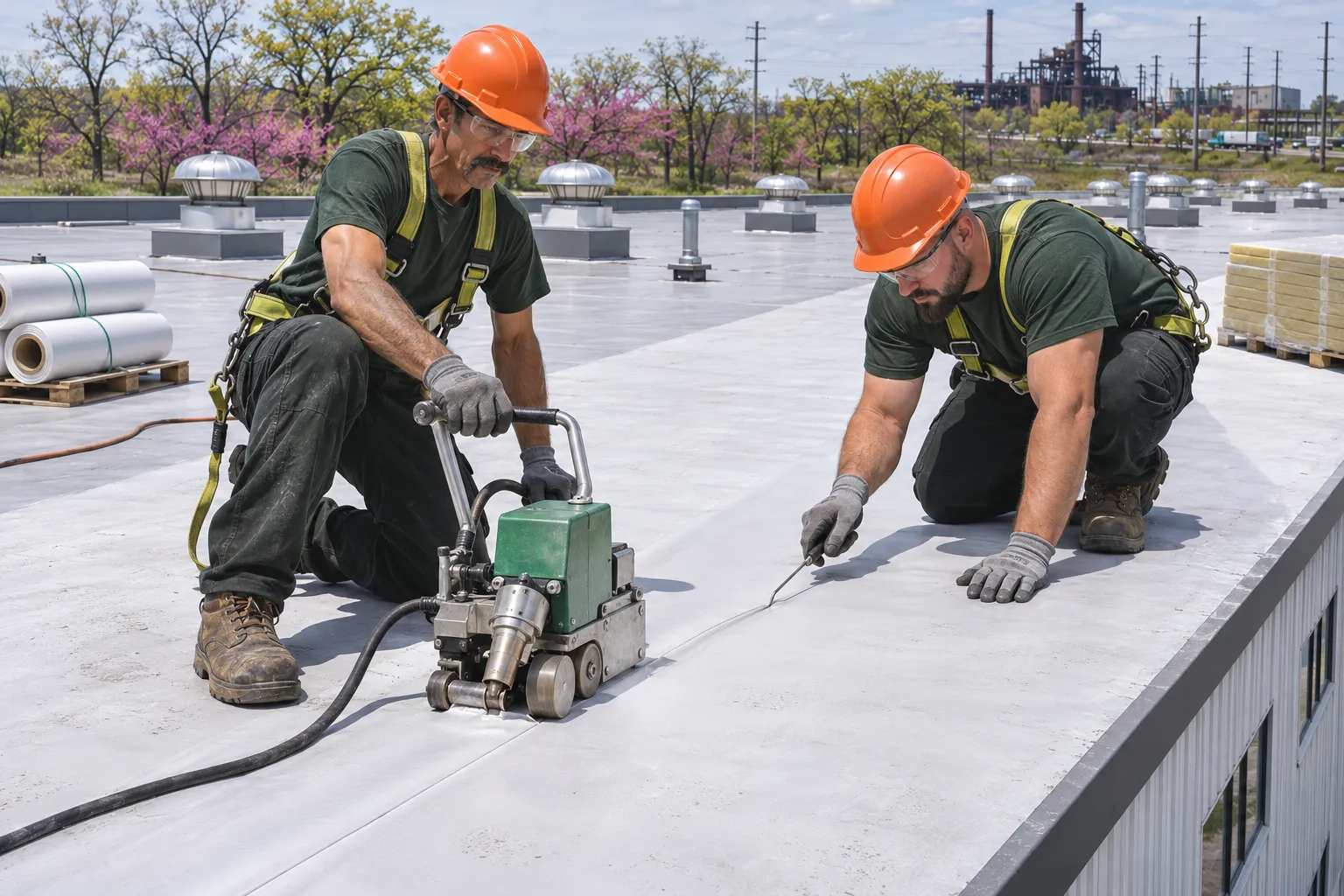
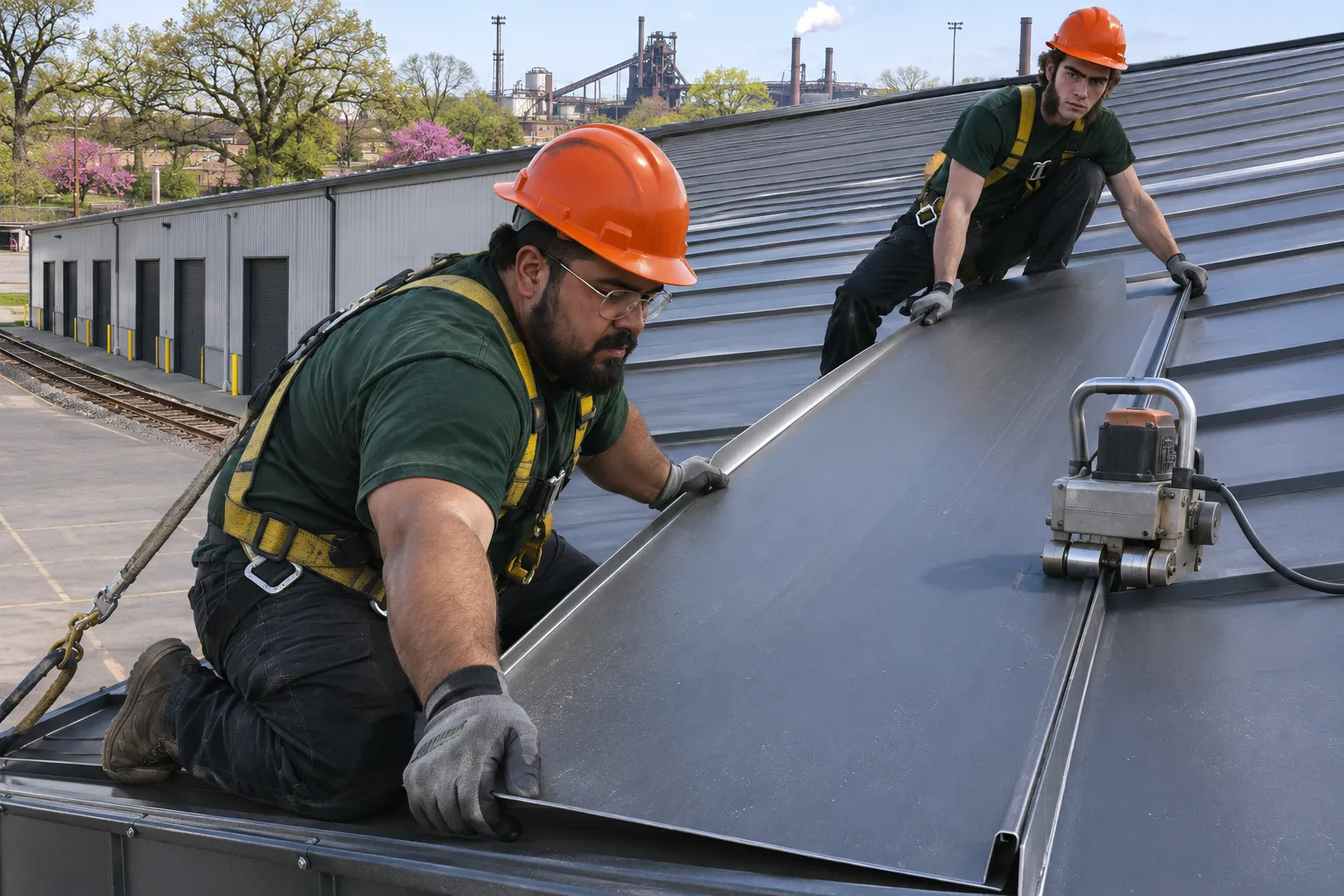
Hot-air welding fuses the overlapping sheets into one piece, so a welded lap stands up to the same wind and traffic as the field around it.
A Cooler Roof In July
The white surface reflects sunlight that would heat a dark roof, lowering the roof temperature over stores and offices running air conditioning.
Repairs Welded In Place
Years later, a puncture or loose flashing gets cleaned and welded with new TPO, so the repair bonds to the original sheet.
Seam Opening Up on a TPO Roof?
Call with where the leak shows inside and roughly where it sits on the roof. Open laps get rewelded once the seam is clean and dry.
Five stages take a TPO roof from the first core cut to the last seam probe.
Step 1
Inspect And Core The Roof
We walk the field, check drains and curbs, and cut cores to read the layers and moisture. Those cores decide whether new TPO goes over the old roof or down to the deck.
Step 2
Set The Weld Settings
Test welds are made on scrap each morning and pulled apart by hand. Temperature and speed are adjusted for air temperature, wind, and sun until the sheet tears before the weld gives way.
Step 3
Lay Insulation And Sheets
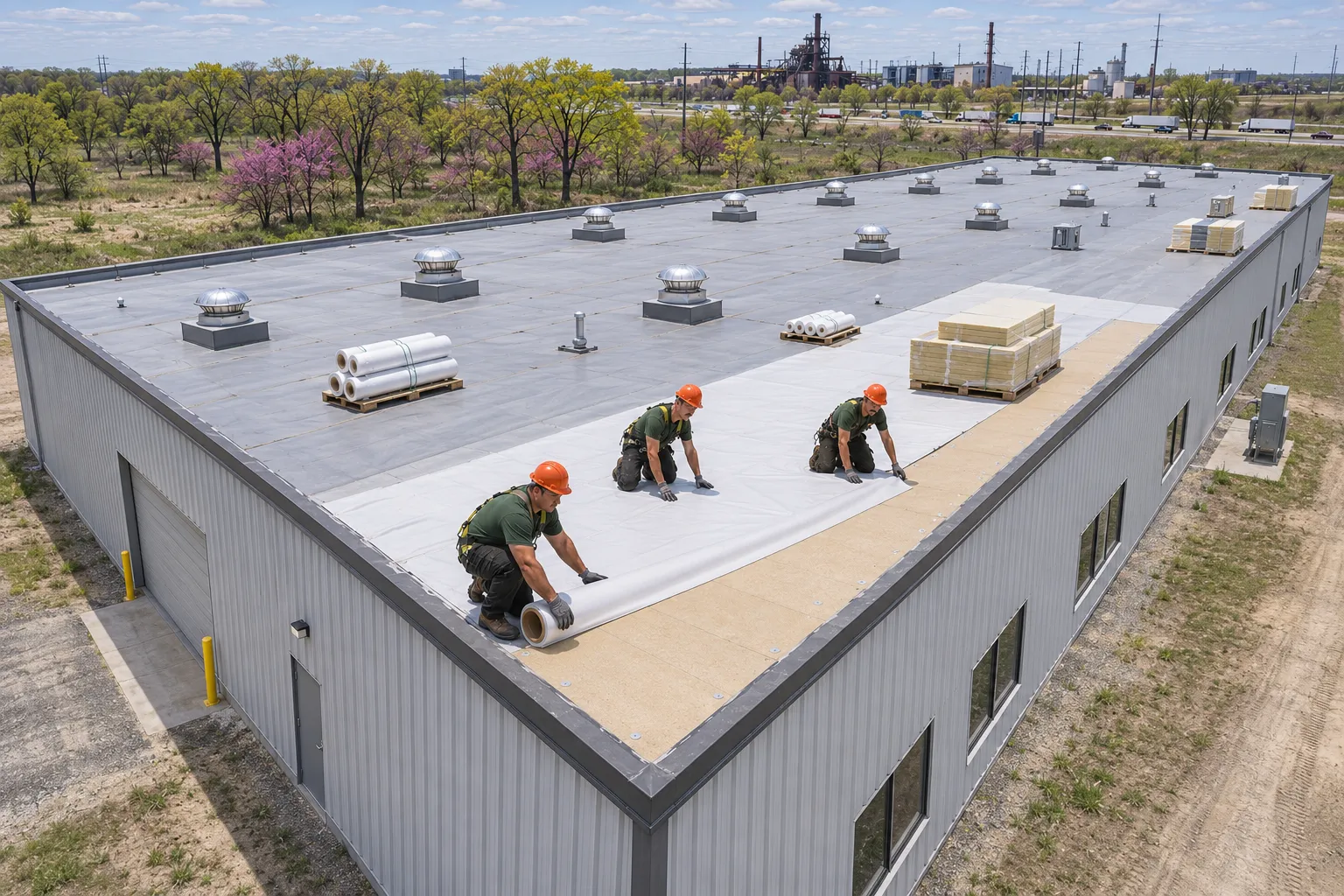
Insulation goes down in sections, tapered toward drains where needed, then TPO rolls out and is fastened or adhered. Each section is closed before the crew leaves.
Step 4
Weld Seams And Flash Details
Every lap is hot-air welded. Curbs, pipes, walls, and drains get pre-formed or field-cut TPO flashing, welded and sealed at the edges.
Step 5
Probe Every Seam
A seam probe runs the length of every weld to catch gaps. Soft spots get rewelded, and the roof walk with you covers the details and photos.
Can a TPO roof last 30 years on a Portage building?
The top of the 20 to 30 year range takes thicker membrane, clean welds, working drainage, and yearly upkeep. Near the lake, wind and winter push hard on attachment and flashing. Ponding, punctures, and skipped inspections shorten a TPO roof more than anything else.
What are the downsides of TPO roofing?
Thin sheets puncture under foot traffic and dropped tools, which is why service routes get walkway pads. Seam strength rides on welding heat and speed, and formulas vary by manufacturer. We probe every welded seam and protect the busiest paths to keep those risks small.
TPO vs EPDM: how do they differ on a Portage roof?
TPO is a white thermoplastic sheet with heat-welded seams that fuse into one piece. EPDM is black synthetic rubber with taped seams and stays flexible in deep cold. The white sheet reflects summer heat, the black one absorbs it, and each is repaired a different way.
How is TPO seam welding done on a Portage roof?
A hot-air welder melts the overlapping sheets into one. Heat and travel speed are set for that day, and test welds are torn apart first to prove the settings. After welding, a seam probe runs every lap so any gap is found and closed before we finish.
What gets checked on a TPO roof after spring hail?
Bruises, punctures, and cracked seams in the membrane, plus flashing, skylights, and the fins on rooftop units. Hail can crush the insulation under a single-ply roof with no visible tear, so we photograph the roof and cut test areas wherever the surface feels soft.
Can new TPO go over an existing roof?
Often, when core cuts show only one roof layer, dry insulation, and a solid deck. A cover board goes down over the old roof and the TPO goes on top. Wet insulation or a second existing layer means a tear-off first.
Hire a Portage TPO Roofing Contractor
Tell us the building, the roof size if you know it, and where it leaks. We will core the roof and price TPO in writing.