You See
Edge metal lifting or rattling
Likely Cause
Loose cleats and too few fasteners letting wind get under the metal and peel it back.
What We Do
We refasten or replace the edge metal with continuous cleats sized for the wind.
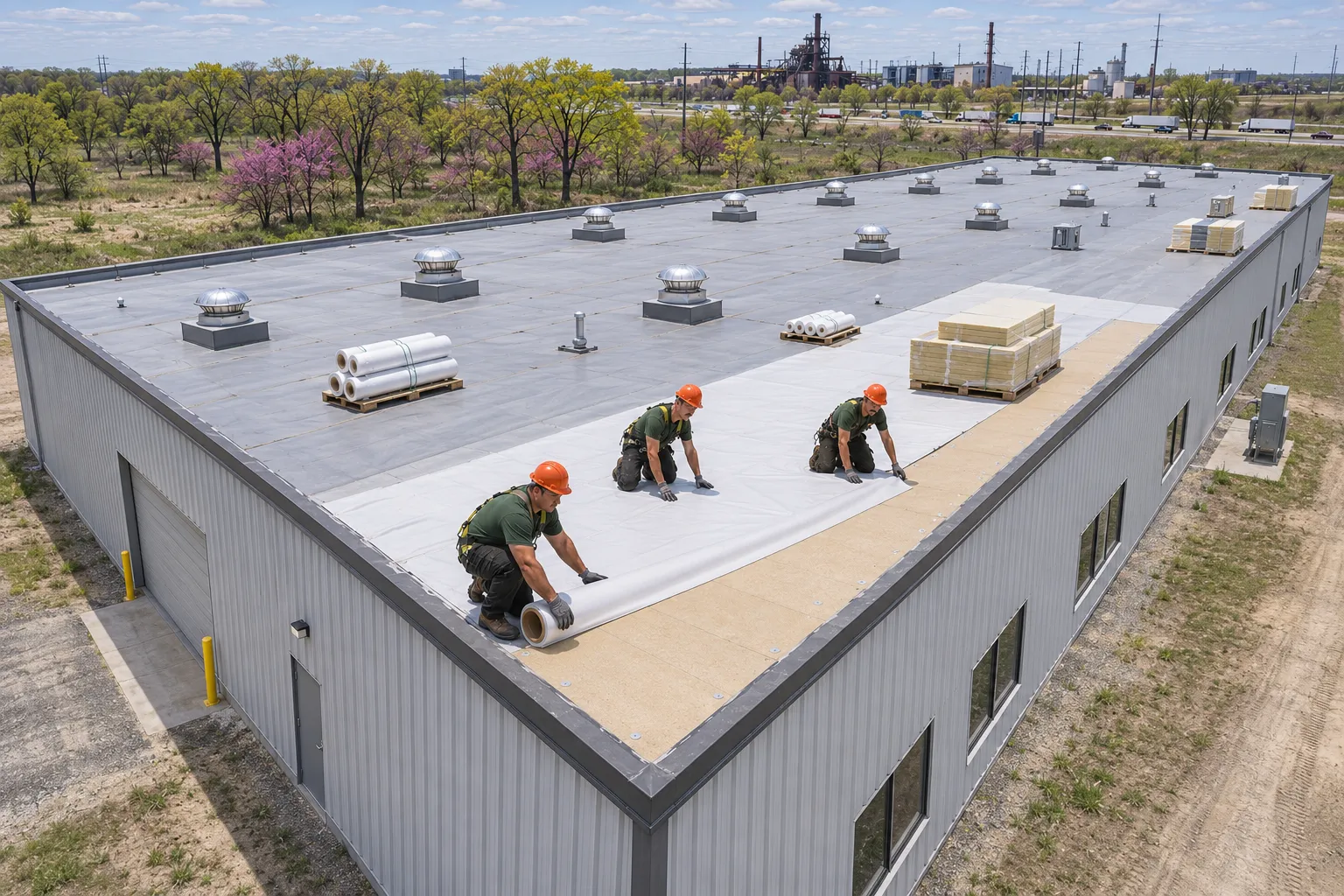
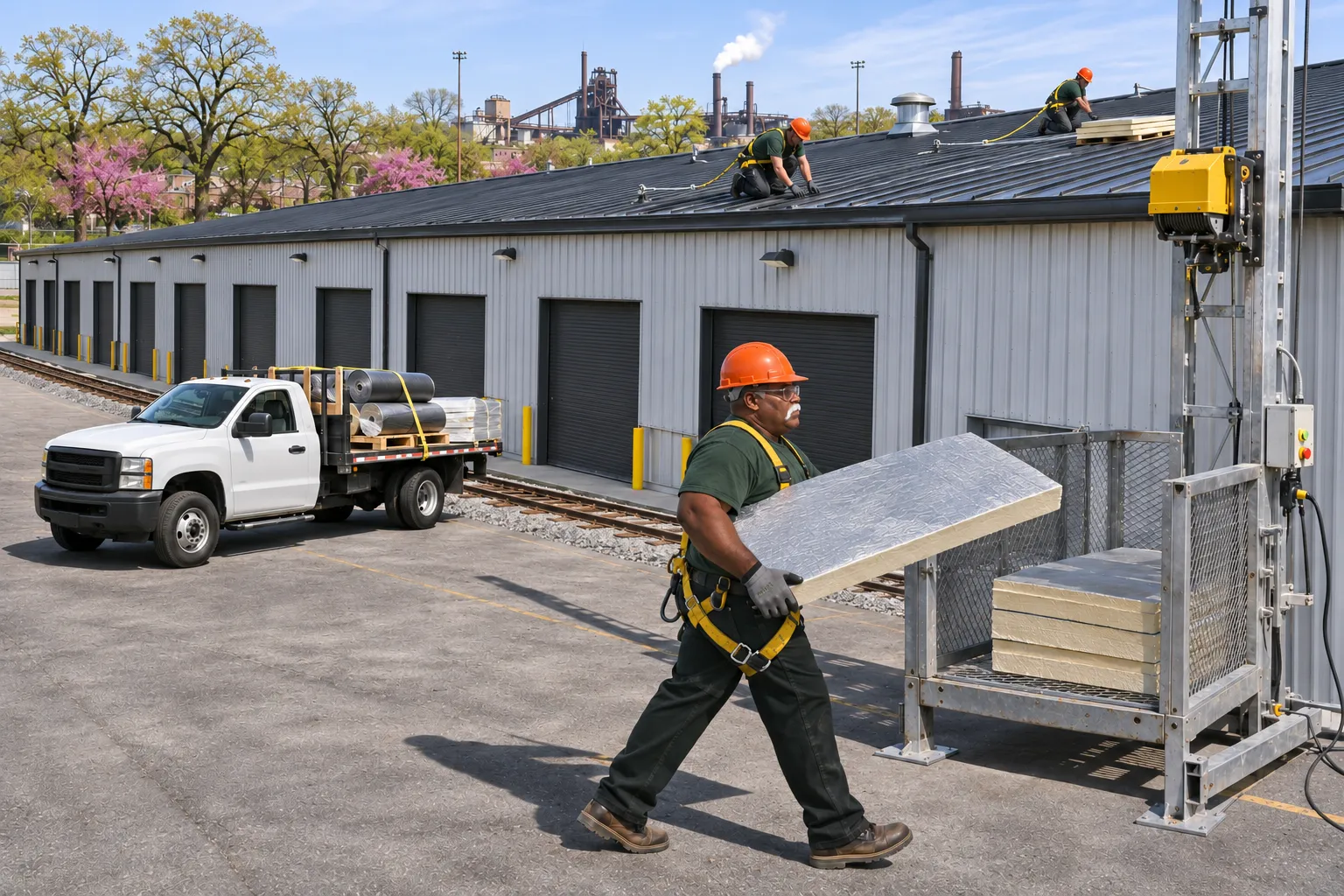
As a Michigan City commercial roofing contractor, we reroof offices, retail, warehouses, and plants with TPO, EPDM, and metal systems built to hold at the edges.
Michigan City commercial roofing starts at the perimeter, because buildings near the lakefront face strong winds and lake-effect snow.
Wind pulls hardest at roof corners and edges. That is where we add fasteners, set the sheet in full adhesive, and fit edge metal and coping sized for the exposure.
The field of the roof gets the same care, but the first thing we check on a windward building is whether the edge metal and the sheet behind it are still holding.
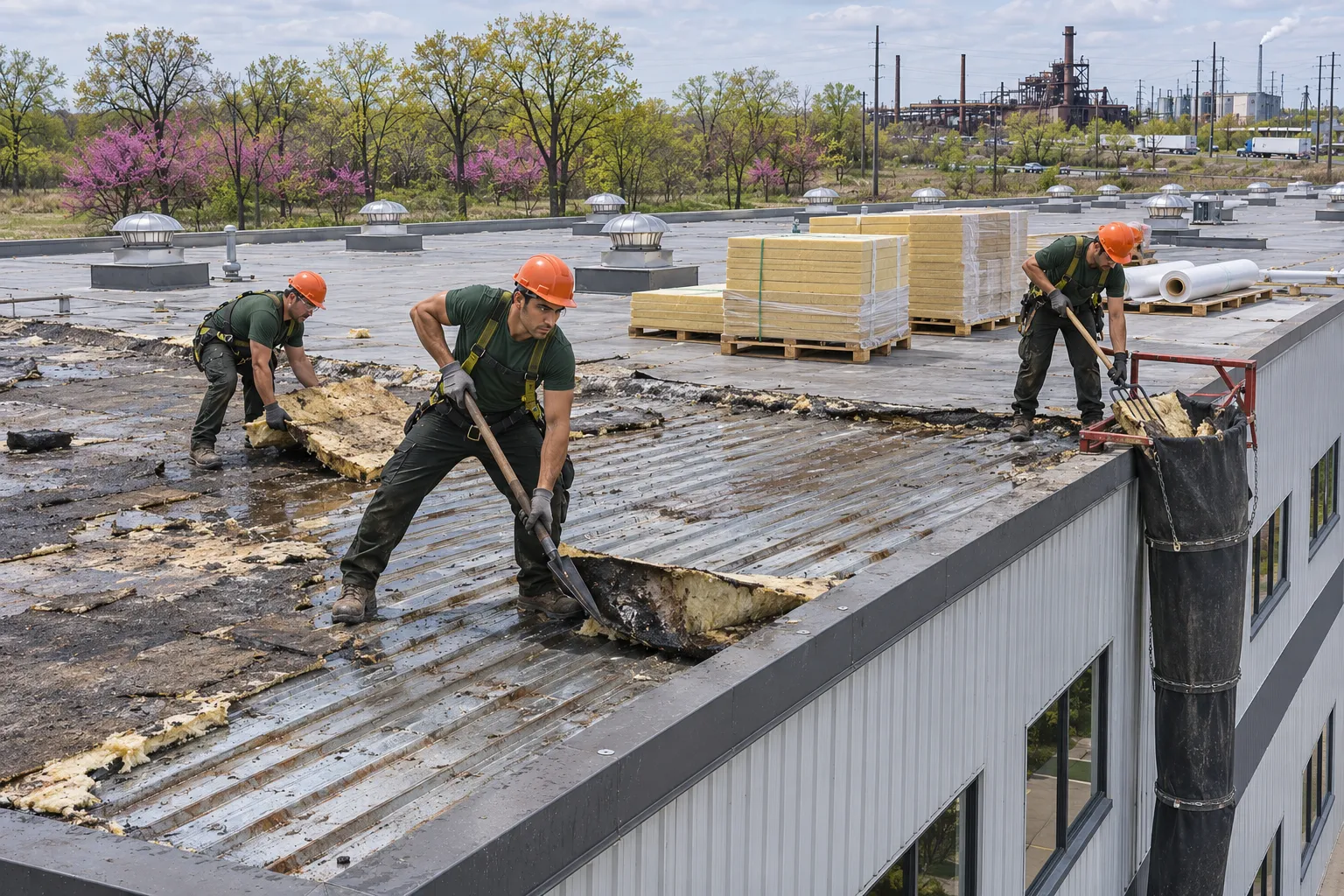
Wind and snow off the lake leave a pattern on these roofs that starts at the outside edge.
Loose cleats and too few fasteners letting wind get under the metal and peel it back.
We refasten or replace the edge metal with continuous cleats sized for the wind.
Sheets fastened only in the field, letting air get under them near the corners.
Corner and perimeter rows get extra fasteners or full adhesive, and torn seams are rewelded or retaped.
Drifts against walls with meltwater rising over low flashing.
We raise wall flashing and clear the drainage path so meltwater leaves the roof.
Damp air working on cut edges and fastener heads near the shore.
Rusted trim is replaced, and new fasteners and edges get coated steel suited to the setting.
Snowmelt refreezing at scuppers and gutters on the shaded side of the building, damming water behind it.
We check the drainage path on the cold side, enlarge scuppers where they are undersized, and raise the flashing behind them.
Lake exposure changes what a roof needs at its edges, and the payoff shows up after each storm.
Continuous cleats and wind-sized coping keep the perimeter from peeling, which is where most wind damage starts.
Extra fastening or full adhesive in corner zones stops the ballooning that tears seams loose in gusts.
Taller wall flashing and clear drains let lake-effect snow melt off the roof instead of backing up under it.
Secured edges and corners mean fewer emergency calls after big wind days, and less interior damage when a storm does come through.
Each system gets a wind-ready edge on lake-exposed buildings.
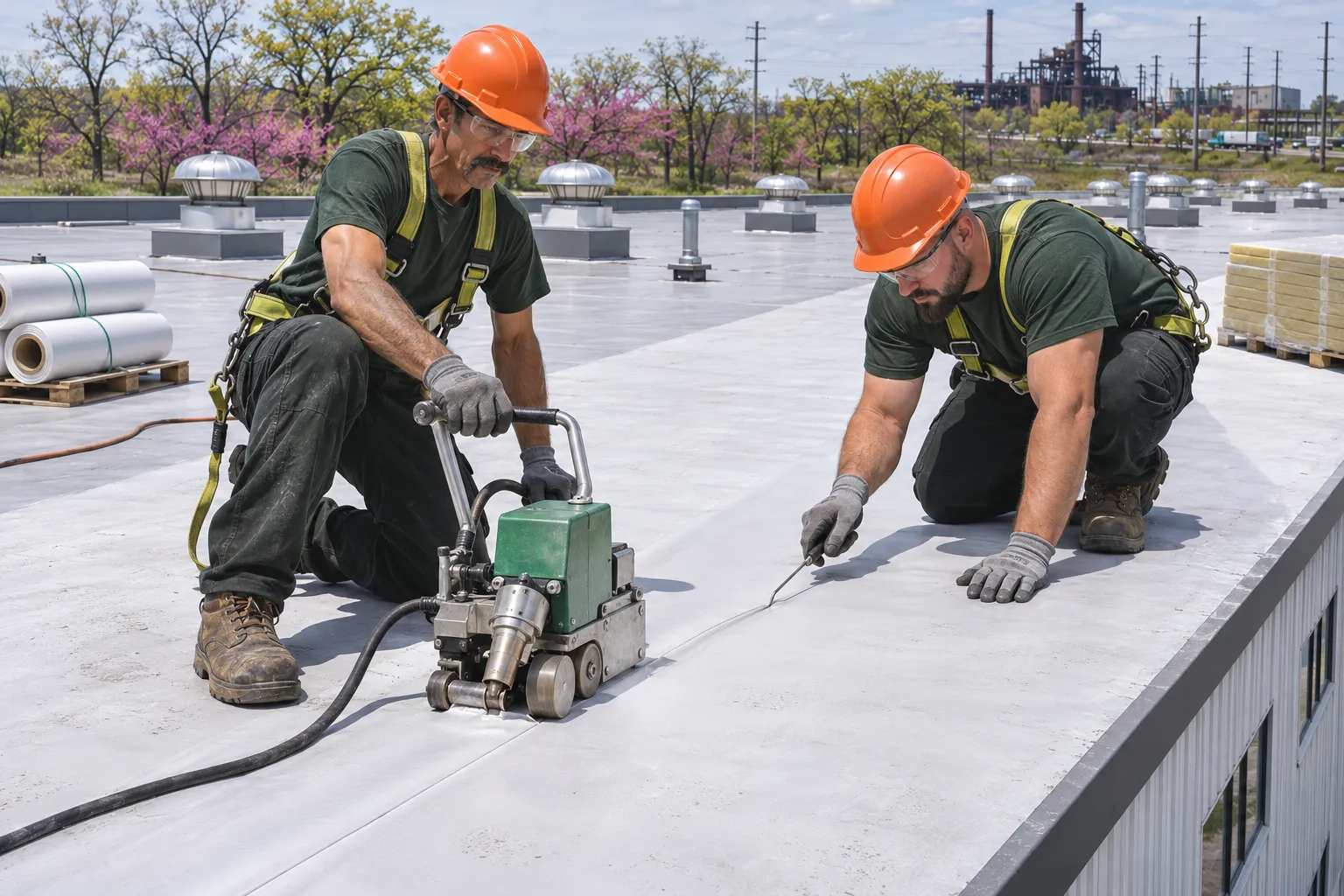
Welded white sheet, fully adhered at corners and edges on windward roofs near the shore.
TPO Roofing details →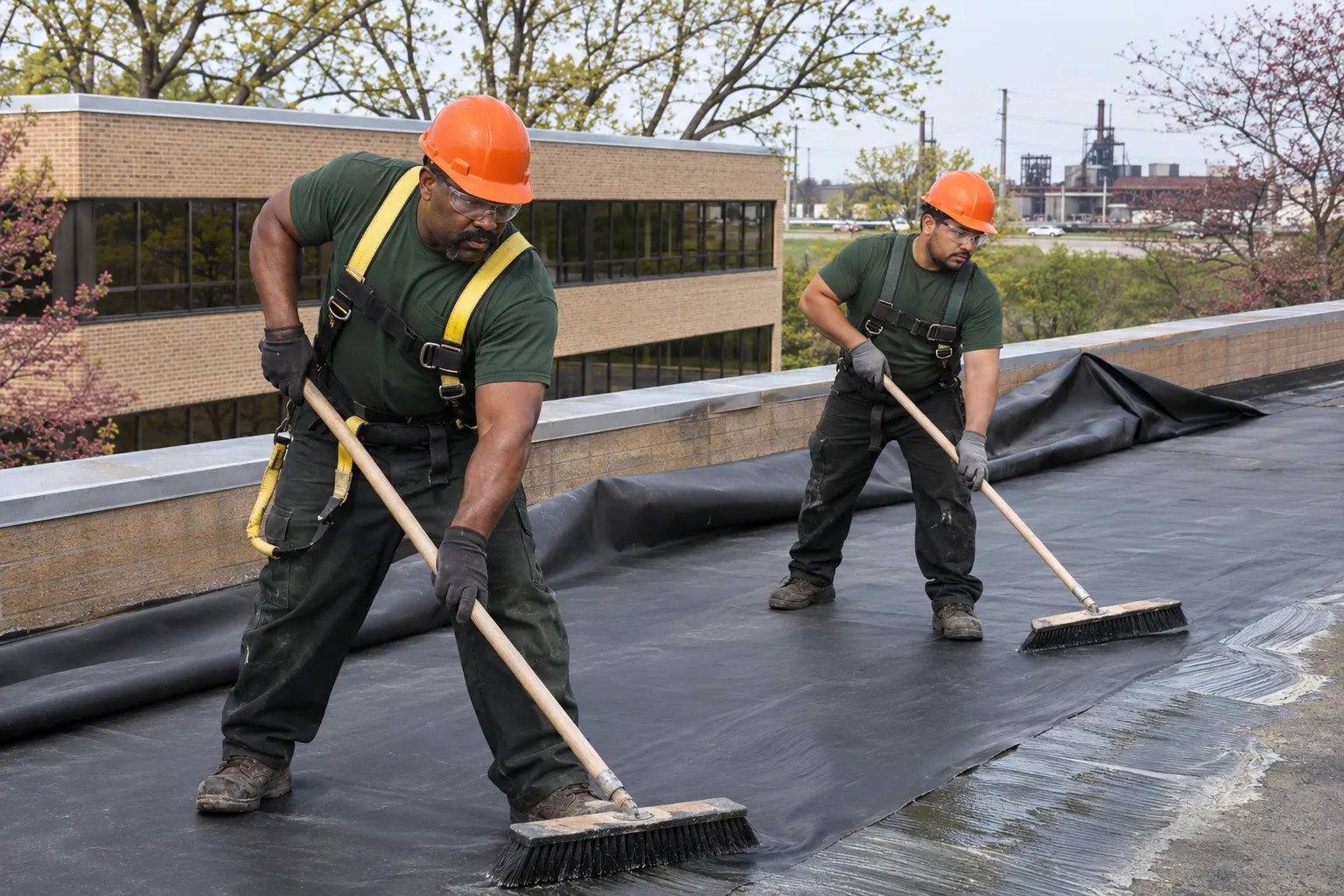
Adhered rubber membrane that stays flexible through hard lake winters and long melts.
EPDM Roofing details →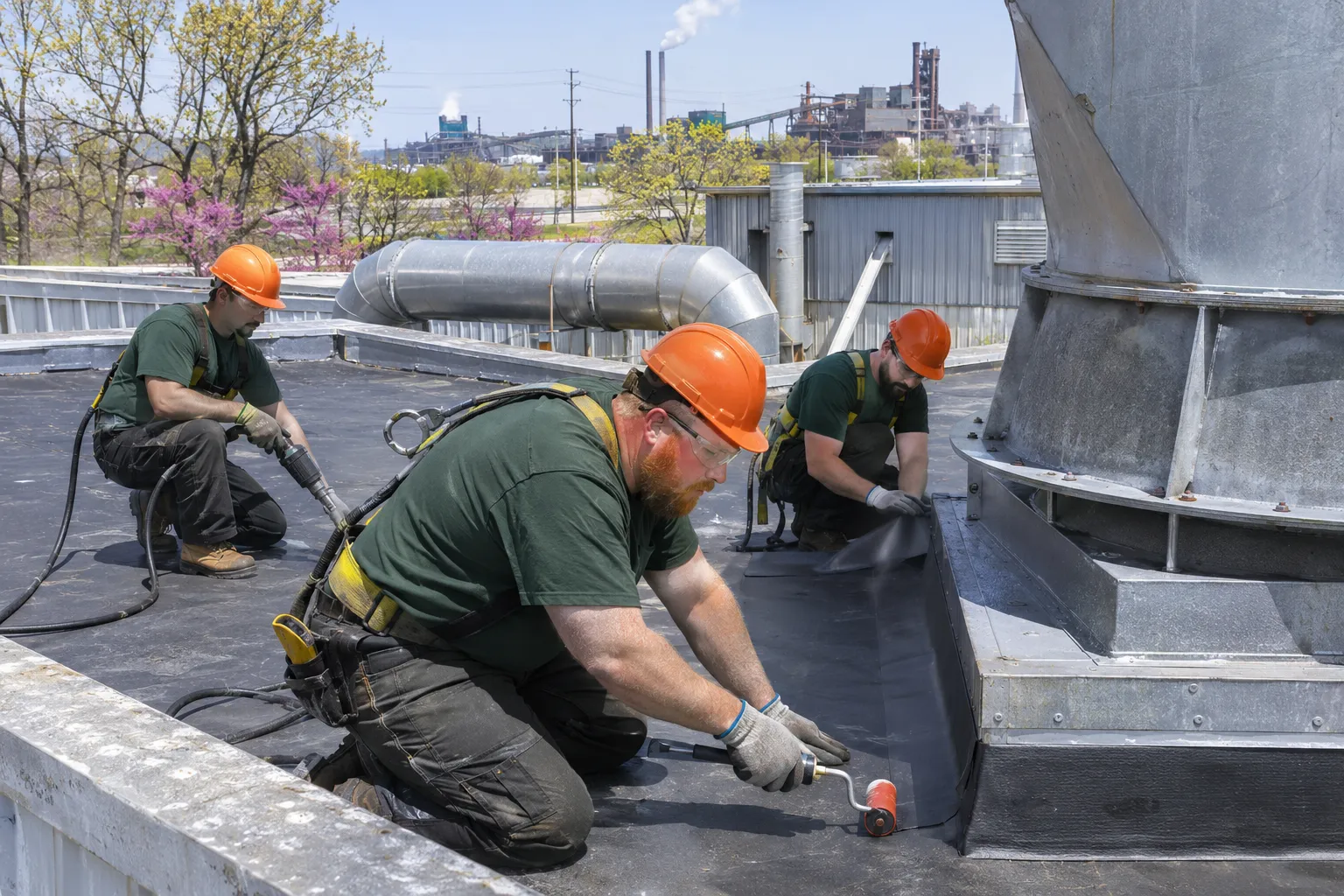
Heavier sheets and secured curbs for plant roofs that catch open wind across the lot.
Industrial Roofing details →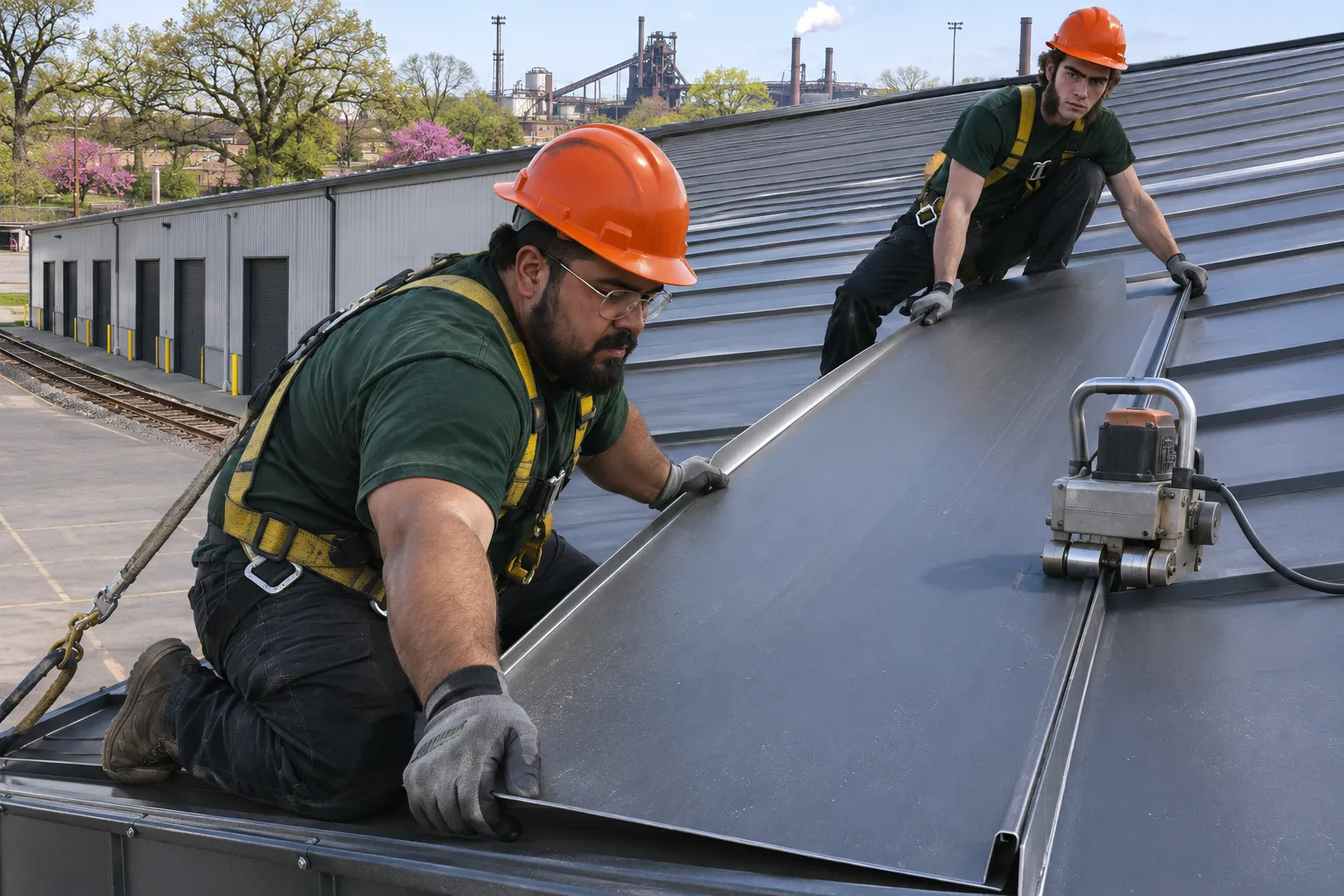
Standing-seam panels with clips and trim rated for the wind at the building.
Commercial Metal Roofing details →Call and tell us which side of the building took the wind. Loose edge metal gets secured first so the next gust does no more damage.
Five stages, starting and ending at the roof edge.
We pull on edge metal, look for ballooning, and core the corners, then check seams and drains across the field.
Fastener rows, adhesive zones, and edge metal are sized for how exposed the building sits, and listed in the written scope.
Sections open on calm days where possible and close before the crew leaves, with loose materials tied down on the roof.
Extra fastener rows or full adhesive go in corner and edge zones, then new edge metal and coping go on with continuous cleats.
The final walk circles the whole edge, then crosses the field to check seams, drains, and curbs.
Is your building somewhere else nearby? We cover these towns as well; for others, call us or send us a message.
Older buildings where existing layers get counted first.
Lake Station commercial roofing →Yes, with TPO, EPDM, and metal systems. Lakefront buildings see strong wind and lake-effect snow, so attachment, perimeter edge metal, and flashing get extra attention, and work is phased so each section closes up daily.
Price follows roof size, the system, layers to remove, insulation, and how much edge and corner detailing the wind exposure calls for. Lakefront roofs carry more perimeter work than inland ones. Each building is priced after a free roof visit.
Edge metal with continuous cleats, coping fastened on both sides, and gauges sized for the exposure. On the most exposed roofs we choose systems tested for wind uplift and fasten them to match.
Corners and edges get more fasteners per row, closer rows, or full adhesive, because uplift is strongest there. The field of the roof can use standard spacing once the perimeter is secured.
Fully adhered sheets hold better on very exposed roofs and keep the membrane from fluttering. Mechanically fastened sheets work inland with added perimeter rows. Deck type and exposure decide it during the first visit.
Lake Michigan is fresh water, so the concern is damp air rather than salt. Moisture still works on cut edges and fastener heads, so we use coated steel trim and check fasteners on each visit. Trim and fasteners near the shore get a closer look at every inspection.
Tell us how close the building sits to the lake and where it leaks. We will check the edges first and price the reroof in writing.