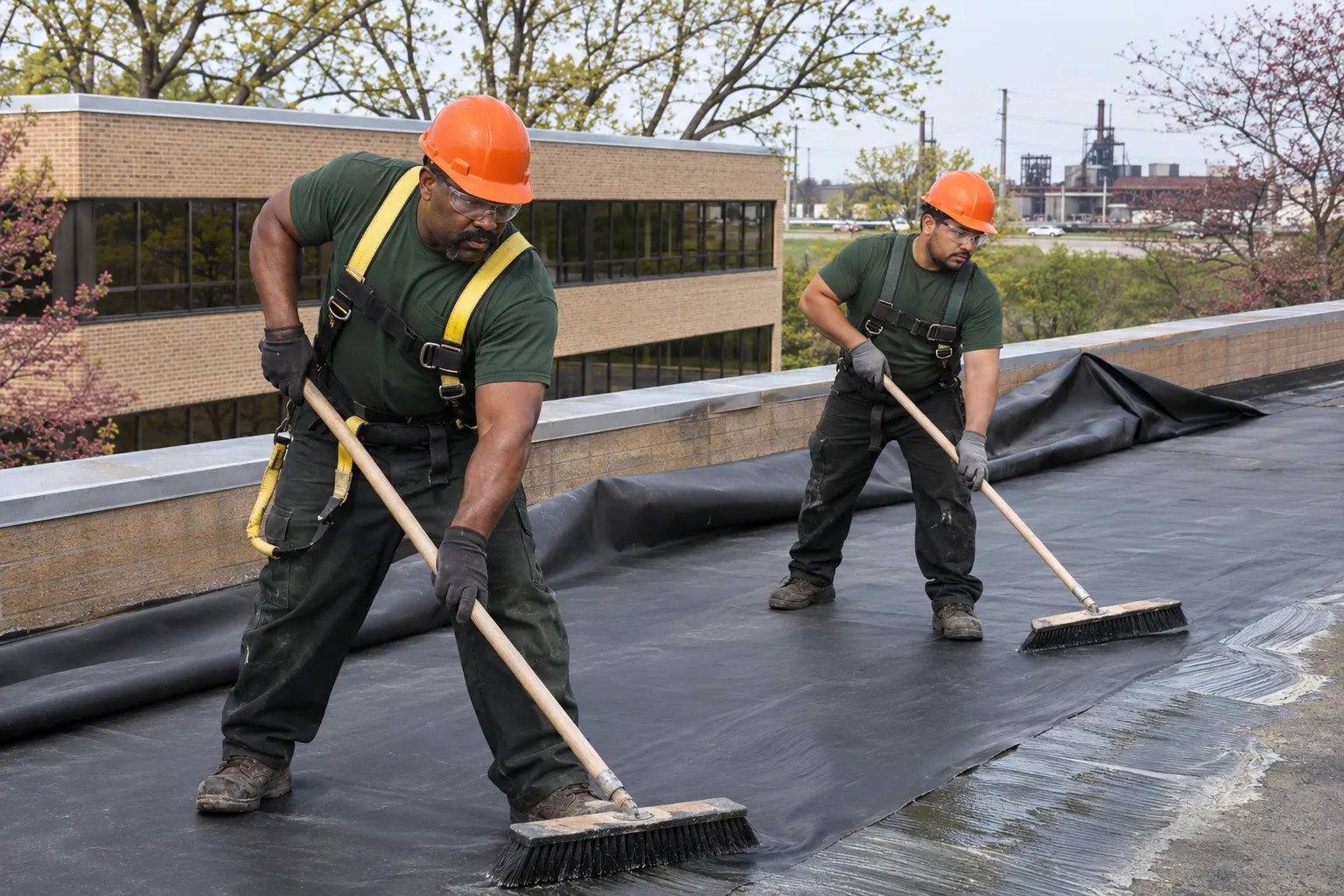
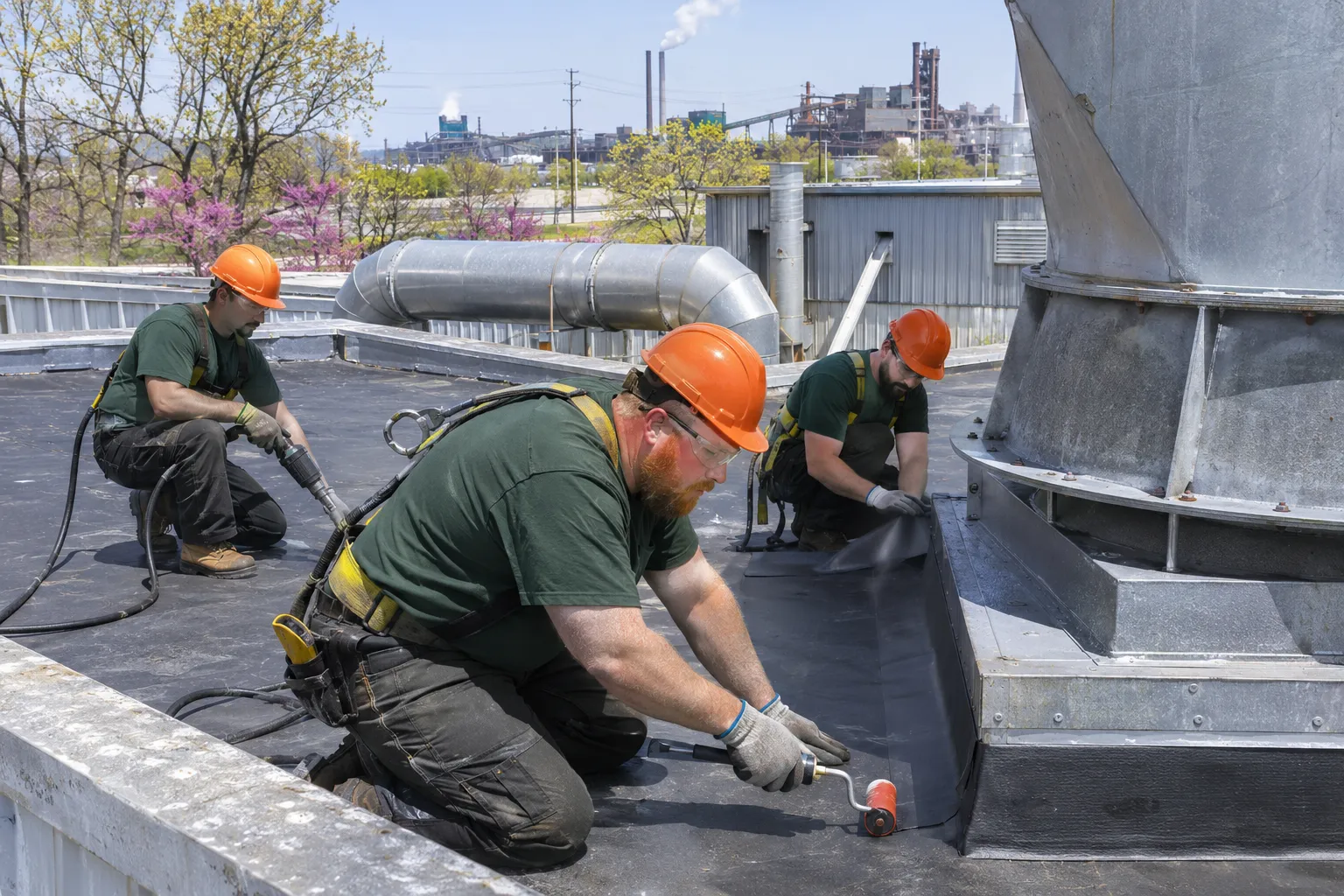
Standing-Seam And Exposed-Fastener Panels For Shops, Offices, And Farms
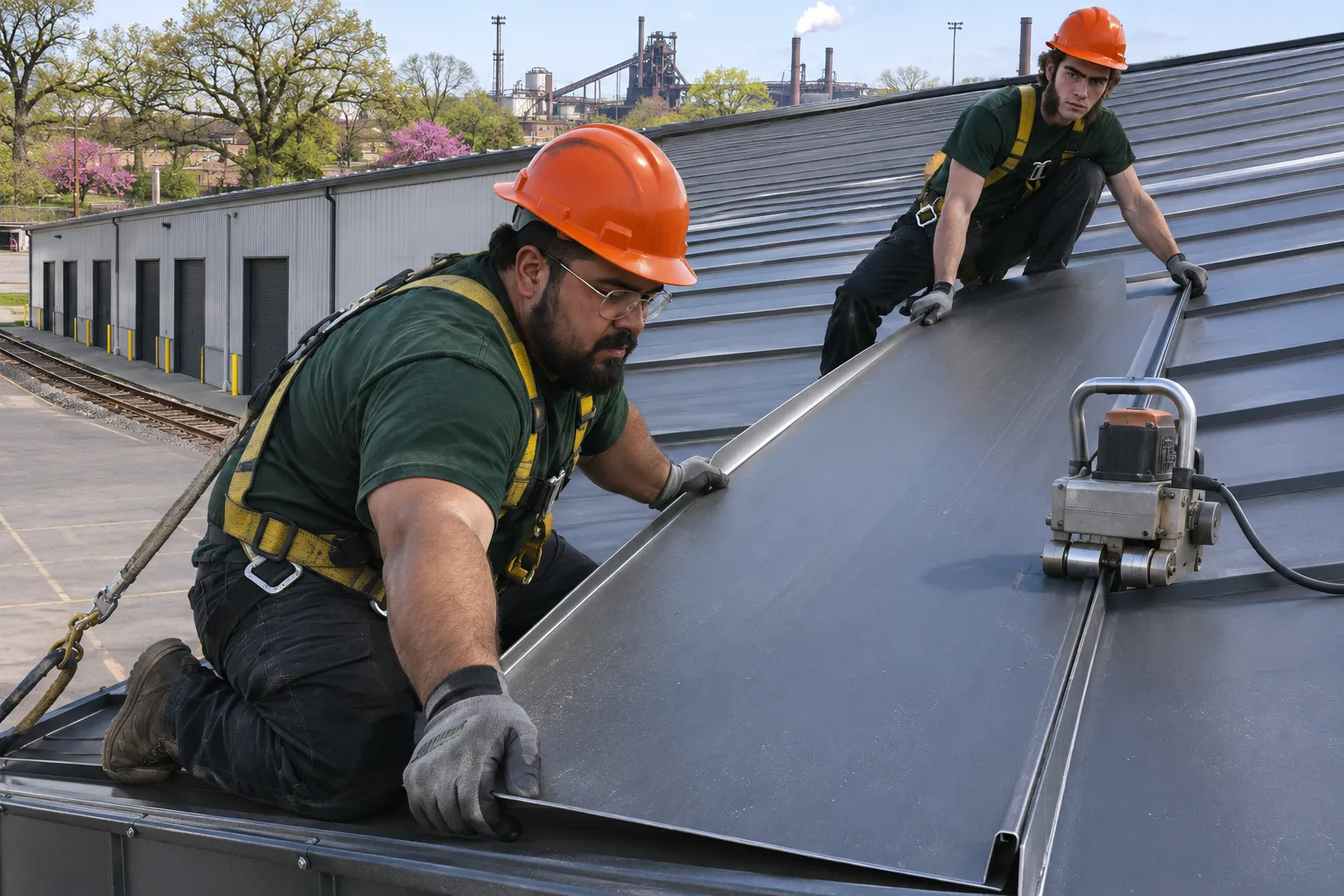
As a Portage commercial metal roofing contractor, we install, repair, and maintain standing-seam and exposed-fastener metal roofs on shops, offices, retail, and farm buildings.
Does Portage Commercial Metal Roofing Fit Your Building?
Portage commercial metal roofing fits pitched roofs, wide shop spans, and retrofits over tired flat roofs. These lists show where it fits and what to settle first.
Metal Fits Well When
The roof has enough pitch for panels to shed water and snow.
Wide spans on shops, barns, or storage need few supports.
A worn flat roof can take retrofit framing and new slope.
Owners want a roof with little upkeep beyond fasteners.
The building faces heavy snow that should slide off.
Settle These First When
The structure has not been checked for added load.
Condensation drips from panels inside the building.
Existing panels are rusted through over large areas.
Flat sections drain too slowly for panels.
Wall and roof flashing details were never finished.
Roof Symptoms
Commercial Metal Roofing Problems on Portage Buildings
Metal roofs leak at their joints and fasteners long before the panels wear out. These four cause most of the calls.
SymptomLikely CauseWhat We Do
You See
Leaks in rows along the screws
Likely Cause
Backed-out screws and cracked rubber washers on exposed-fastener panels, loosened by years of heat and cold.
What We Do
We replace the washers and screws, upsizing where holes have wallowed out, and seal the laps along that run.
You See
Rust at panel ends and cut edges
Likely Cause
Moist air from the lake reaching bare steel at cut edges, laps, and scratched coating.
What We Do
Rusted-through panels are swapped, and edges that are still solid get cleaned and sealed.
You See
Water at walls and penetrations
Likely Cause
Flashing that was short, bent, or sealed only with caulk at walls, vents, and curbs.
What We Do
New flashing goes in with proper laps and closures, so water sheds over the joint.
You See
Drips inside on cold mornings
Likely Cause
Condensation forming under the panels when warm, moist air inside meets cold steel.
What We Do
Ventilation and insulation changes go in with the roof work, so moisture stops collecting under the panels.
System Choices
Commercial Metal Roofing Systems for Portage Retail Centers
Panel type, profile, and attachment decide upkeep and how a metal roof handles wind and snow.
Standing-Seam Panels
Concealed clips hold raised seams, so panels move freely with temperature and few fasteners face the weather.
Exposed-Fastener Panels
Screws with washers go through the panel face. They cost less up front and need fastener checks over the years.
Retrofit Framing
Purlins or framing fastened through to the structure carry new panels over an old roof and can add slope.
Insulation And Vapor Control
Insulation and a vapor retarder below the panels cut down condensation and heat loss in heated buildings.
What You Gain
Commercial Metal Roofing in Portage, Indiana, for Shops And Farms
Metal panels earn their keep on buildings with wide spans, heavy snow, and owners who want a roof that asks little of them.
Shop Buildings
Barns And Farm Shops
Offices
Retail
Snow That Slides Off
Pitched metal panels shed snow instead of holding the load, which suits buildings that catch lake-effect bands.
Wide Spans With Few Supports
Panels cover big openings on shops and barns, so equipment bays stay clear of extra posts.
Upkeep You Can Plan
Standing seam needs little beyond seam and flashing checks, and exposed-fastener roofs need screws and washers renewed on a schedule.
Screws Backing Out of a Metal Roof?
Call and describe where the drips land inside. Leaks in a straight line usually point to a row of fasteners we can reset.
What are the biggest problems with metal roofs on Portage buildings?
Loose fasteners, open laps, rust at panel ends, and failed flashing at walls and penetrations cause most leaks. Damp lake air speeds corrosion at cut edges too. We reset fasteners, rework flashing, seal laps, and replace panels that have rusted through.
Standing seam vs exposed fastener metal roofs: which suits my building?
Standing seam hides its fasteners under raised seams and lets panels move, so it has fewer leak points and less upkeep. Exposed-fastener panels cost less up front but rely on screws and washers that need renewing. Offices and retail lean toward standing seam; shops and storage often use exposed fastener.
Is metal roofing a good fit for agricultural buildings?
Barns, equipment sheds, and farm shops around Portage use metal because it spans wide openings and sheds snow. Exposed-fastener panels are the common pick. On livestock buildings we plan ventilation and condensation control so moisture stays off the underside of the panels.
Can a metal roof go over an existing roof?
In many cases. Retrofit framing or purlins fastened through to the structure carry new panels over the old roof and skip a full tear-off. The old roof must be dry, and an engineer confirms the building can carry the added load before work starts.
Do I need a permit for a commercial metal roof in Portage?
Check with the City of Portage Building Department, which handles permits, inspections, and contractor licensing. Indiana commercial buildings fall under the Indiana Building Code, 675 IAC 13. Whether a permit applies depends on the scope, so confirm it before the work begins.
How often should exposed fasteners be checked?
Walk the roof at least once a year and after big wind or hail. Look for screws backing out, cracked washers, and rust at the heads. Catching a loose row early keeps a single drip from soaking the insulation below.
Hire a Portage Commercial Metal Roofing Contractor
Tell us the building type, the panel type if you know it, and where water shows. We will walk the panels and price the work in writing.