You See
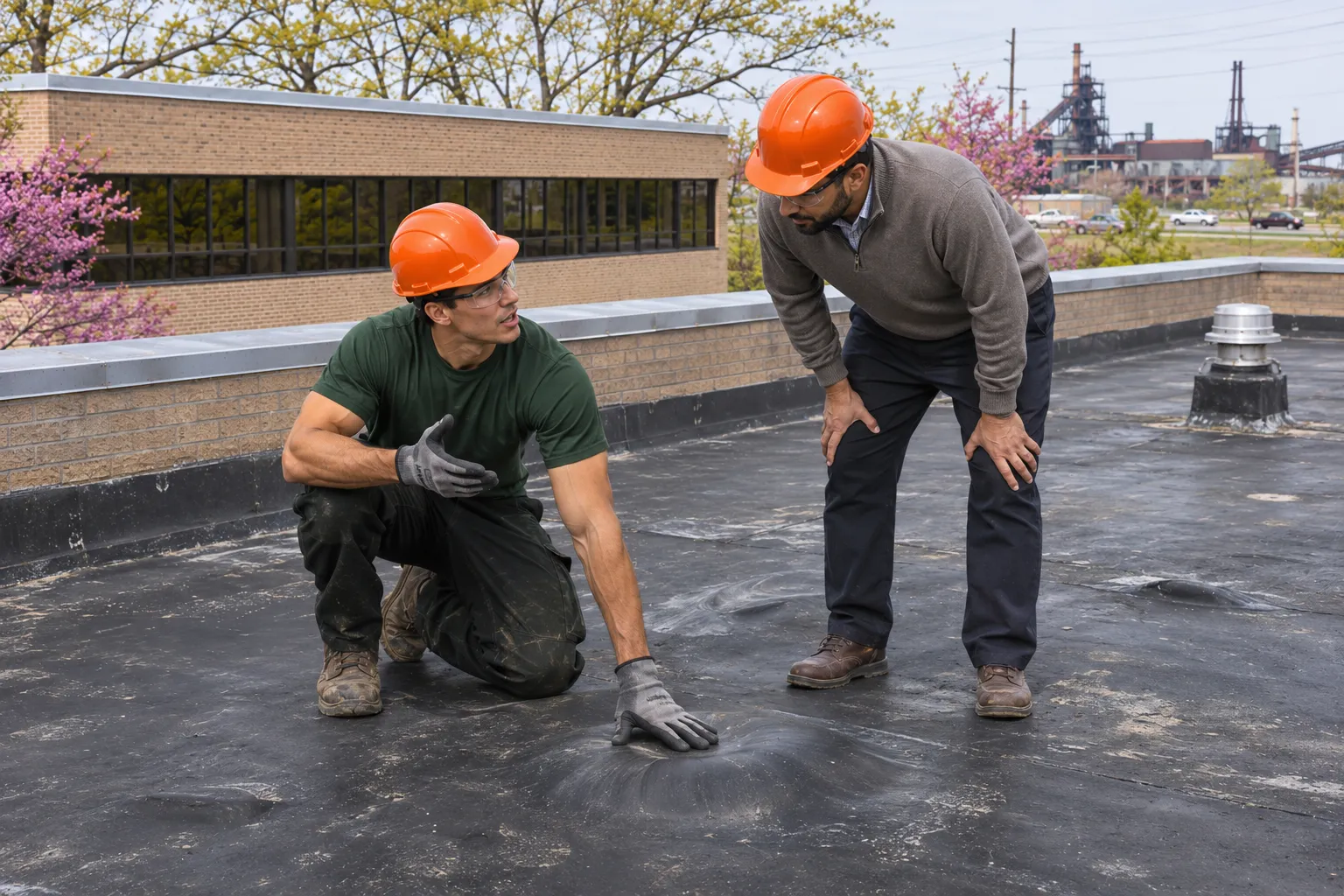
Soft spots underfoot
Likely Cause
Wet insulation trapped between two old roof layers, slowly crushing under foot traffic.
What We Do
We core the soft areas and plan a tear-off where moisture has spread between layers.
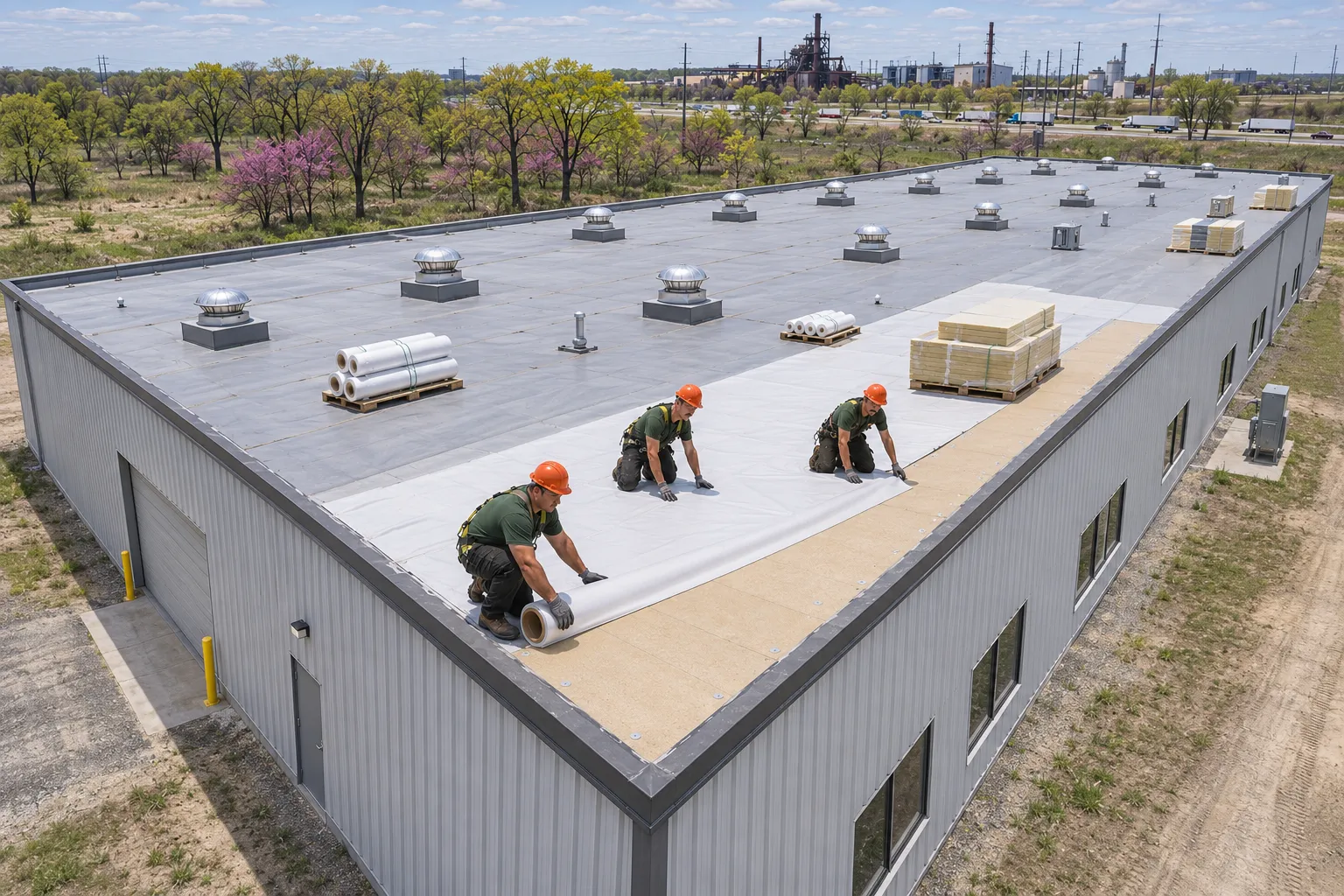
As a Lake Station commercial roofing contractor, we install metal roofs and TPO or EPDM flat roofs on shops, storage buildings, offices, and retail, starting with the deck and drainage.
Lake Station commercial roofing decisions start below the surface, with how many roofs are already stacked on the deck.
Older shops and storefronts often carry a second roof put on over the first. Core cuts show each layer, whether the insulation between them is wet, and what shape the deck is in.
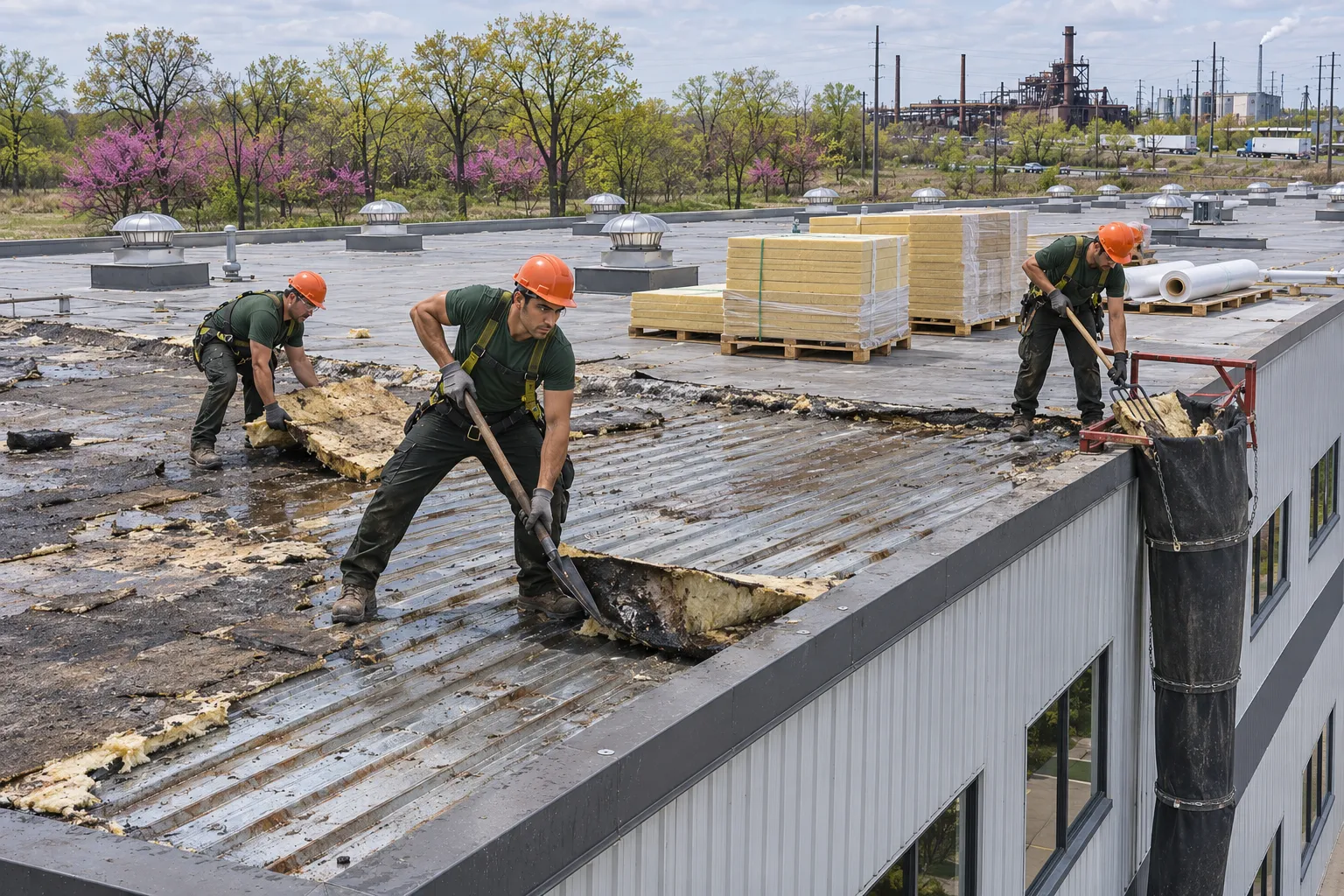
One dry layer over a solid deck can take a recover. Two layers, wet insulation, or rusted deck call for a tear-off, which also lets us fix the deck before new insulation goes down.
Stacked roofs and aging decks cause a set of problems that look minor from the surface.
Wet insulation trapped between two old roof layers, slowly crushing under foot traffic.
We core the soft areas and plan a tear-off where moisture has spread between layers.
Steel deck corroding from years of small leaks held against it by the old roofs.
Bad deck panels are replaced during the tear-off before new insulation goes down.
Exposed-fastener metal roofs whose washers have cracked with age.
Fasteners and washers are replaced, and laps are resealed along the run.
Added layers over the years raising the field above the drains or scuppers.
Tear-off brings the roof back down and tapered insulation sends water to the drains.
Edge and coping set for one roof, now buried or pushed out of shape after a second roof was laid over it.
Tear-off brings the edge back to one roof thickness, and new edge metal and coping go on at the right height.
Knowing what is under the surface keeps the new roof from inheriting old problems.
Rusted or soft deck sections get found and replaced while the roof is open.
Wet boards trapped between layers come out, so the new roof starts dry.
Removing old layers resets the roof level so water reaches drains and scuppers again.
Taking old layers off removes weight the structure has carried for years and leaves room for a future recover.
The layer count and deck condition decide which system goes on and how.
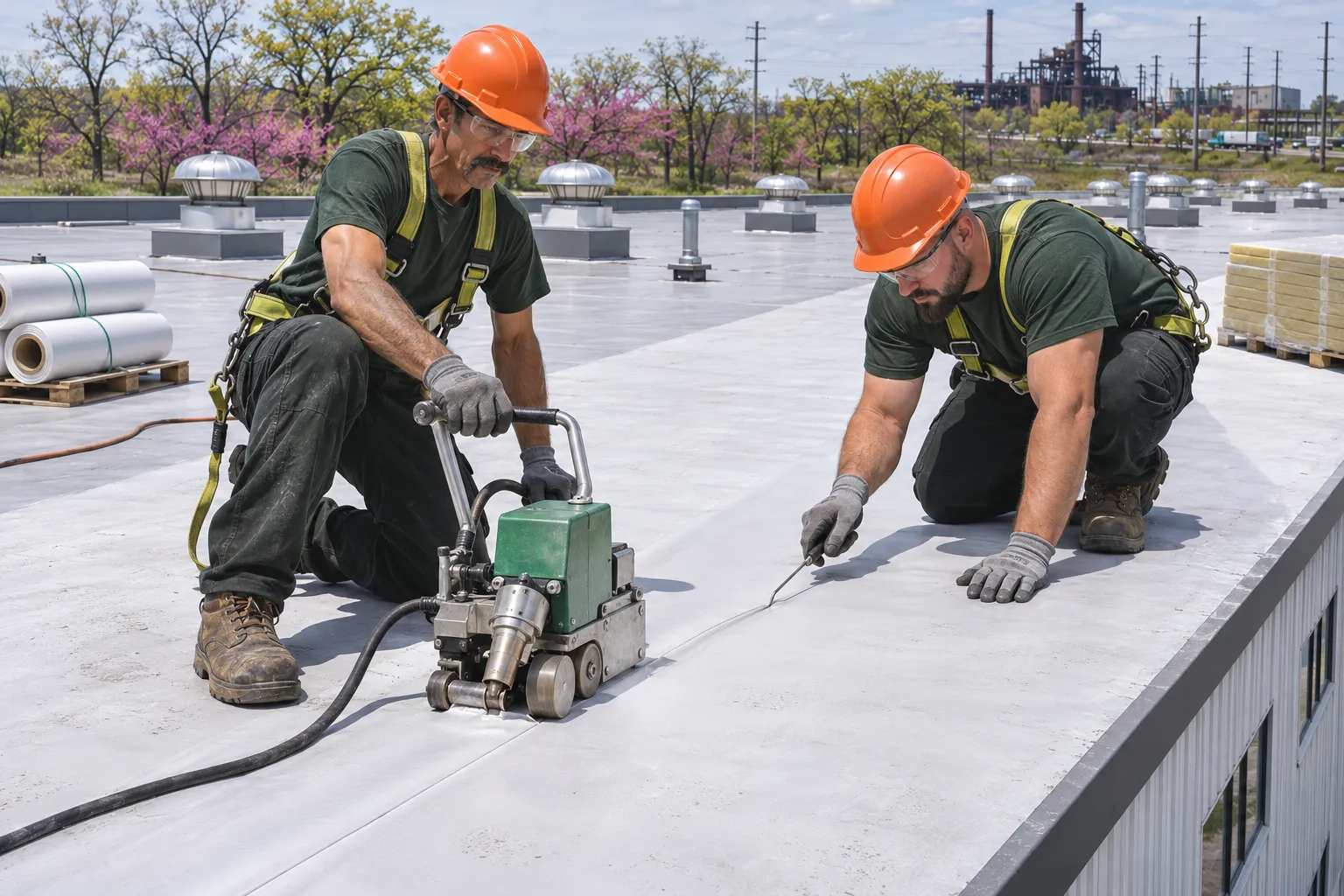
Welded white sheet over a cover board for recovers on one dry layer.
TPO Roofing details →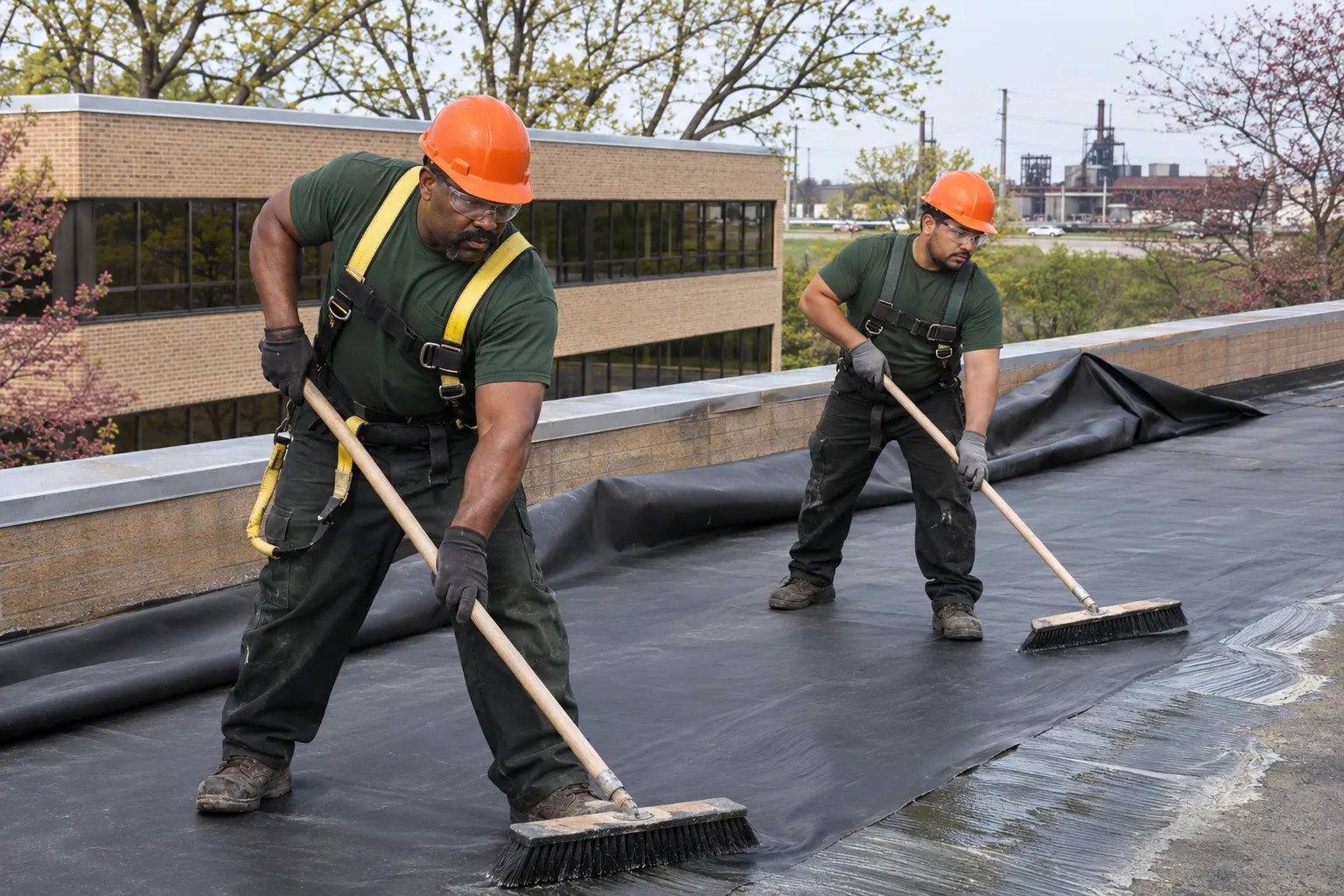
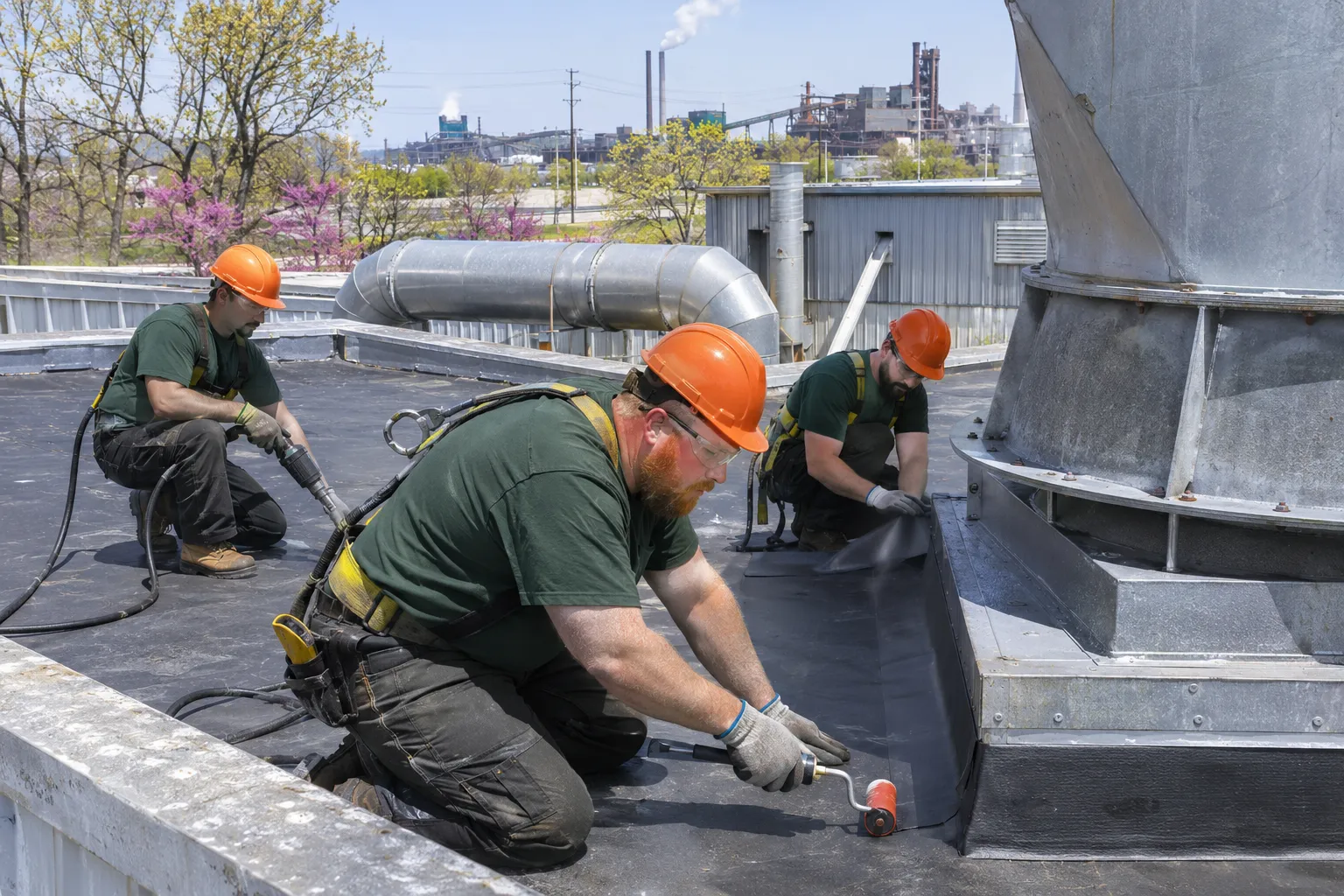
Heavier systems for older plant roofs where deck repair comes first.
Industrial Roofing details →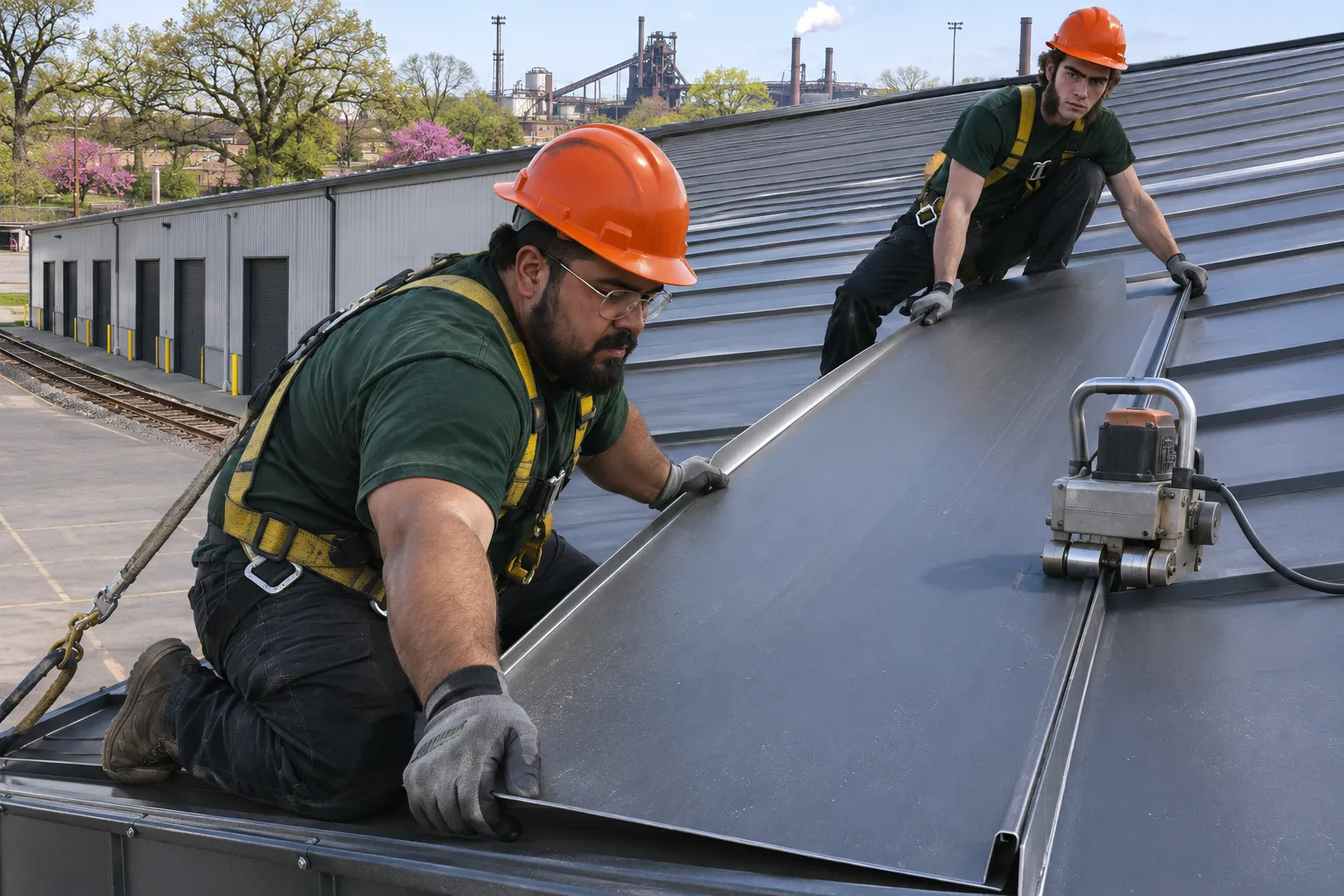
Retrofit framing and new panels over worn flat or metal roofs.
Commercial Metal Roofing details →Call and tell us the age of the building. A few core cuts answer the question and set the plan for recover or tear-off.
Five stages that start with the layers and end with a dry, level roof.
Core cuts go down to the deck in several spots, showing each roof layer, the insulation condition, and the deck.
One dry layer over a solid deck can be recovered; anything more points to a tear-off. You get the choice in writing.
Old layers come off one section per day, and rusted or soft deck panels are replaced before insulation goes down.
Tapered insulation sets new slope to the drains, then the membrane or metal panels go on and flashing is finished.
After the first rain we confirm water reaches the drains, and the final walk covers edges, curbs, and laps.
Need work in another town nearby? We roof the towns below; for others, call us or send us a message.
Yes. Metal fits shops and storage buildings with pitched roofs, and TPO or EPDM fits flat roofs on offices and retail. Each project opens with a check of the deck and the drainage. Core cuts at the same visit show how many roofs are already on the building.
That depends on the code that applies and the condition of the layers, so we check both. In practice, one dry existing layer over a solid deck can often take a recover; more layers or wet insulation point to a tear-off.
Layer count drives it. Removing two roofs costs more than one, deck repairs add to it, and the new system and insulation set the rest. Every building is priced after core cuts on a free visit. Recovering one dry layer usually costs less than tearing two off, which is why the layer count comes first.
Core cuts decide it. A recover needs one dry layer and a solid deck. Wet insulation, a second existing roof, or rusted deck mean the old roofing comes off first.
Each added layer raises the roof surface, and drains or scuppers end up higher than the water around them. Tear-off and tapered insulation bring the slope back to the drains. New scuppers or drains are added where the walls trap water.
Ask the local building office for the property before work starts. Indiana commercial buildings fall under the Indiana Building Code, 675 IAC 13, and the scope decides what the city requires.
Tell us how old the building is and where it leaks. We will core the roof and price recover or tear-off in writing.