You See
A worn path across the roof
Likely Cause
Repeated foot traffic from the hatch to the units, grinding grit into an unprotected sheet.
What We Do
Worn membrane is patched or replaced, and walkway pads go down along that route.
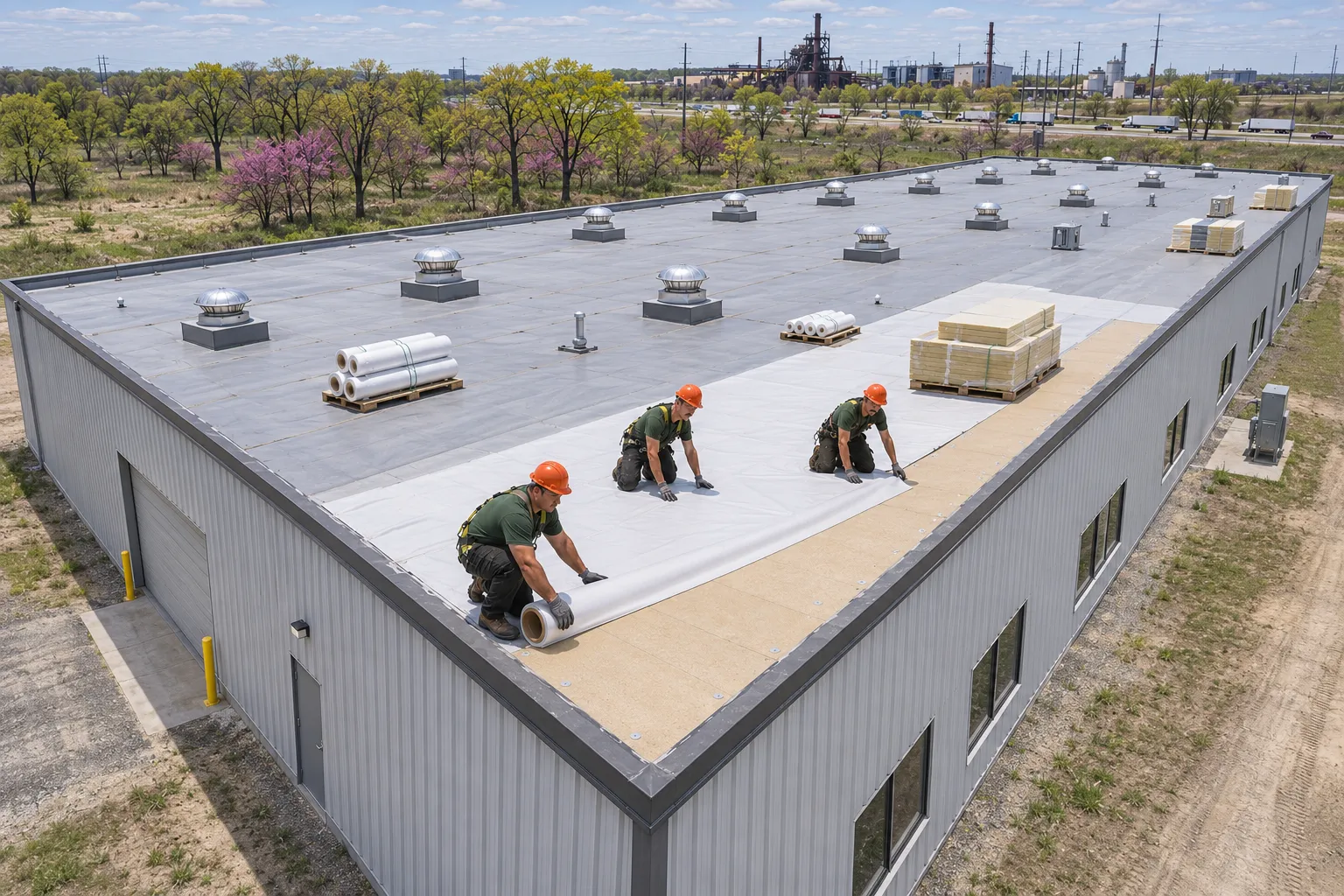
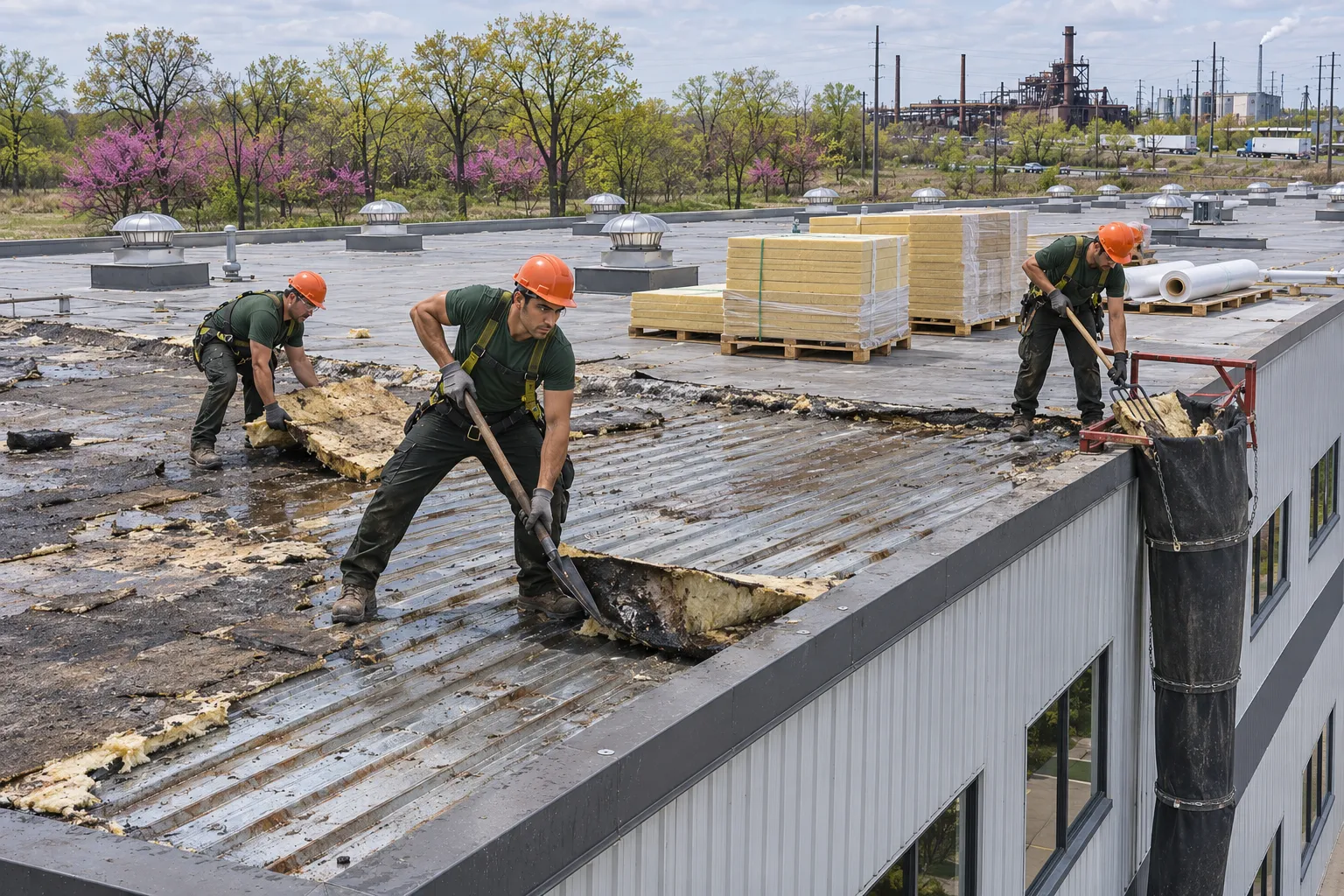
As a Griffith commercial roofing contractor, we install industrial and commercial roofs on warehouses, plants, and shops, with walkway pads, curb flashing, and drainage planned together.
Griffith commercial roofing on warehouses and plants has to handle heavy equipment and frequent service traffic on the roof.
Technicians walk the same routes to fans, units, and hatches every week. Over a few years that traffic grinds grit into the membrane and wears a visible path.
We map those routes on the first walk, then lay walkway pads where people actually go and protect every support under heavy equipment.
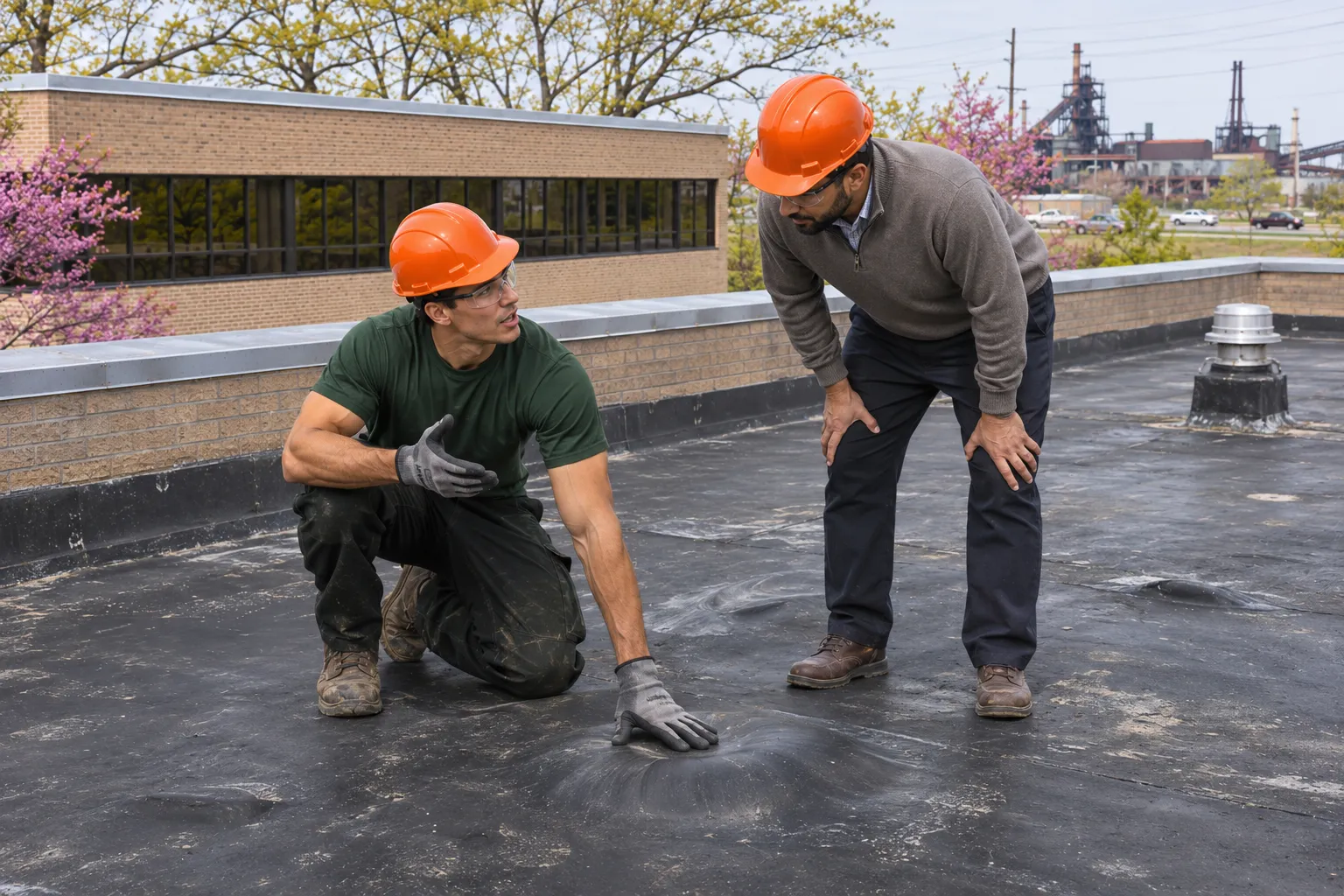
Most leaks on these roofs trace back to people, equipment, or water near the units.
Repeated foot traffic from the hatch to the units, grinding grit into an unprotected sheet.
Worn membrane is patched or replaced, and walkway pads go down along that route.
Flashing worn by heat, vibration, and panels set down on it during service visits.
Curbs get new, taller flashing with reinforced corners.
Tools, parts, and boots landing in the same spot every visit.
We add a protected landing pad around the hatch and repair the sheet below it.
Debris from service work and leaves clogging strainers, with water rising around curbs nearby.
Drains get cleared, strainers replaced, and the slope around them checked.
Unit legs and pipe stands set straight on the membrane, rocking with vibration until they wear through.
Supports get lifted onto protective pads or rubber blocks, and the worn membrane beneath each one is patched.
Planning for traffic up front pays off for the owner and the people who service the building.
Walkway pads take the grinding instead of the membrane, so service visits stop opening new leaks.
Taller, reinforced curb flashing keeps water out at the units that get opened most often.
Clear, padded routes and protected landing zones let technicians reach the units without picking a path.
With traffic kept on pads and supports off the sheet, the field of the roof wears from weather alone, which stretches its service life.
Each system can be built for heavy rooftop traffic.
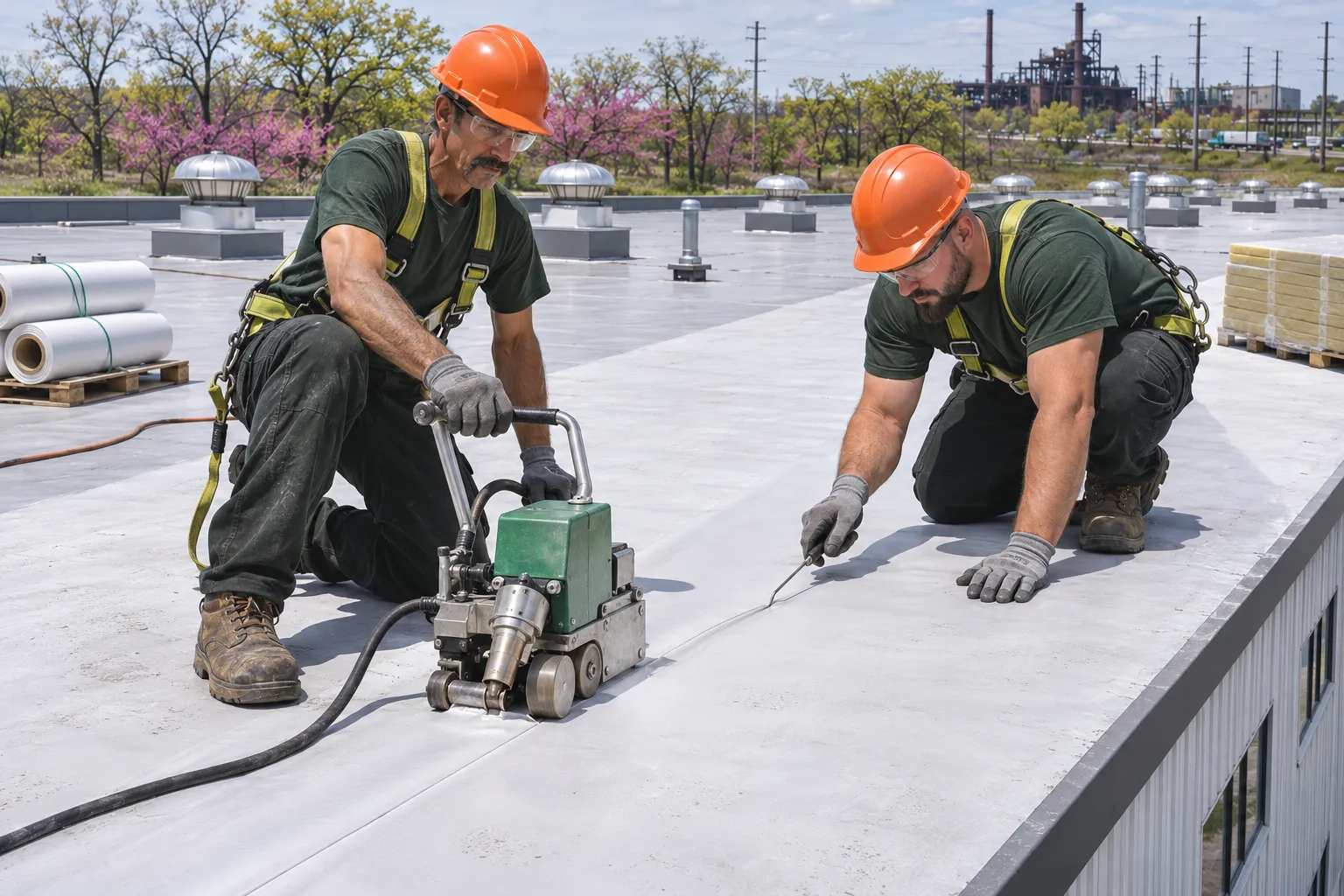
Thicker welded sheets with pads on routes for warehouse roofs with many units.
TPO Roofing details →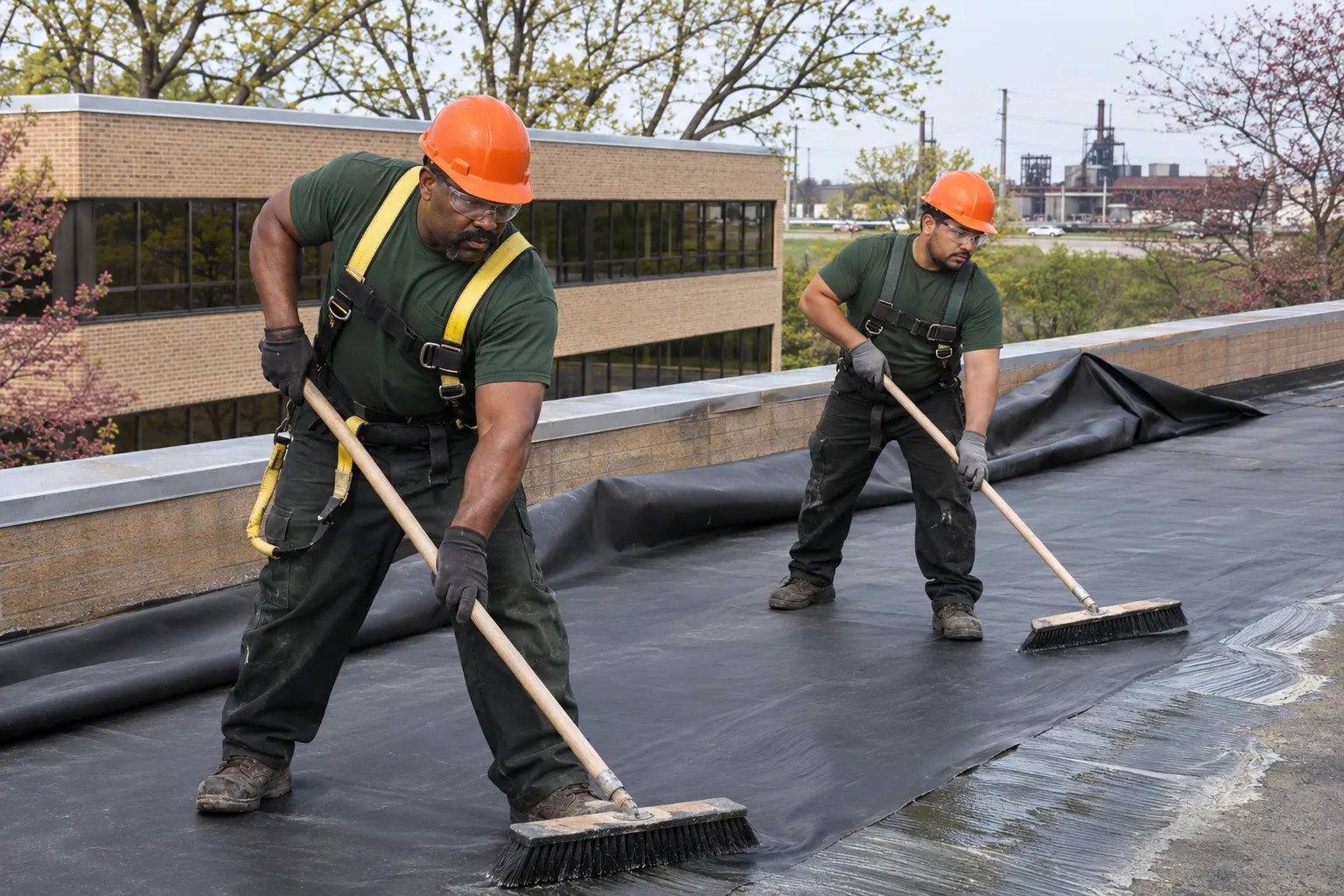
Rubber membrane with taped seams for shop roofs crowded with pipes and vents.
EPDM Roofing details →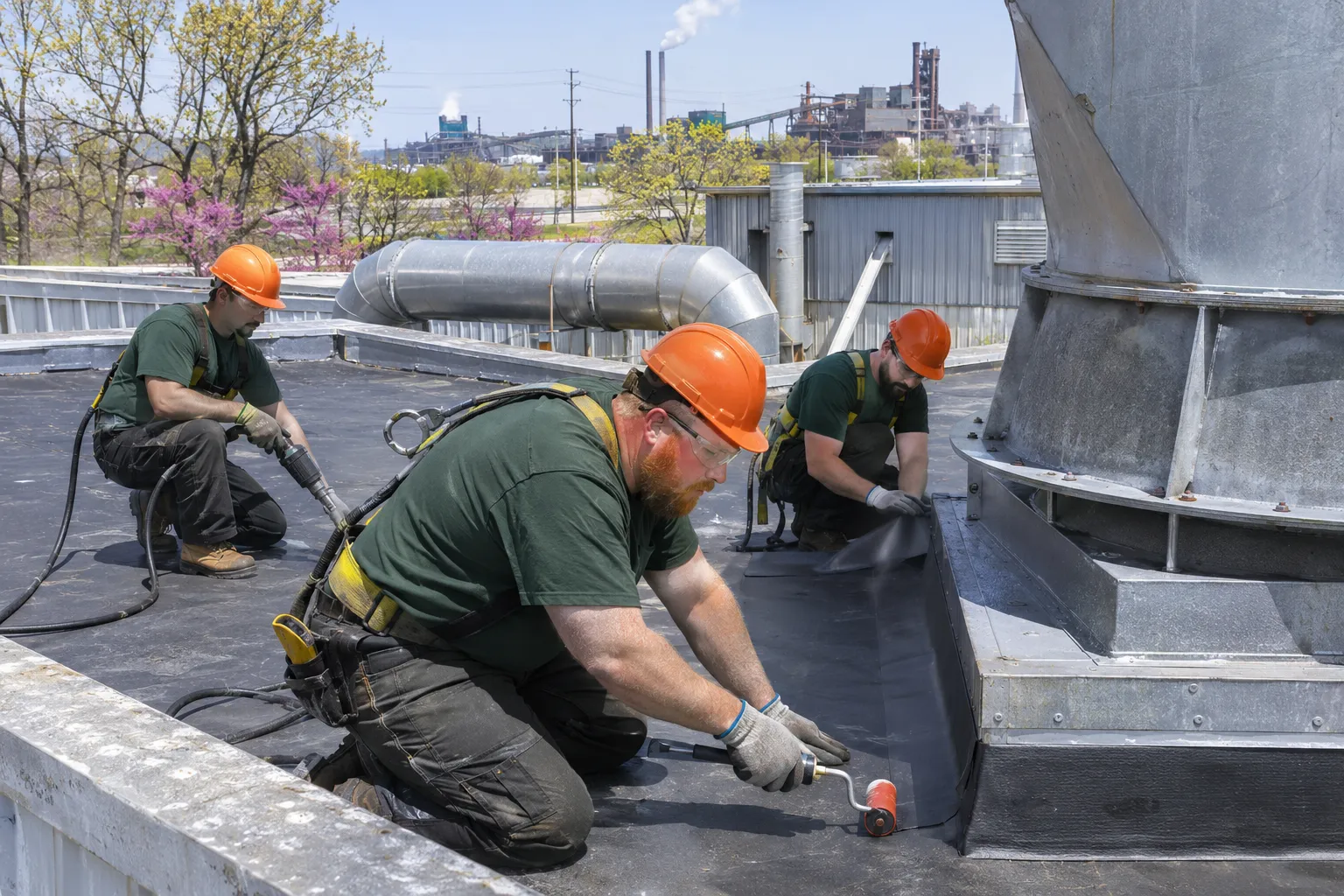
Cover boards and protected supports for plant roofs carrying heavy equipment.
Industrial Roofing details →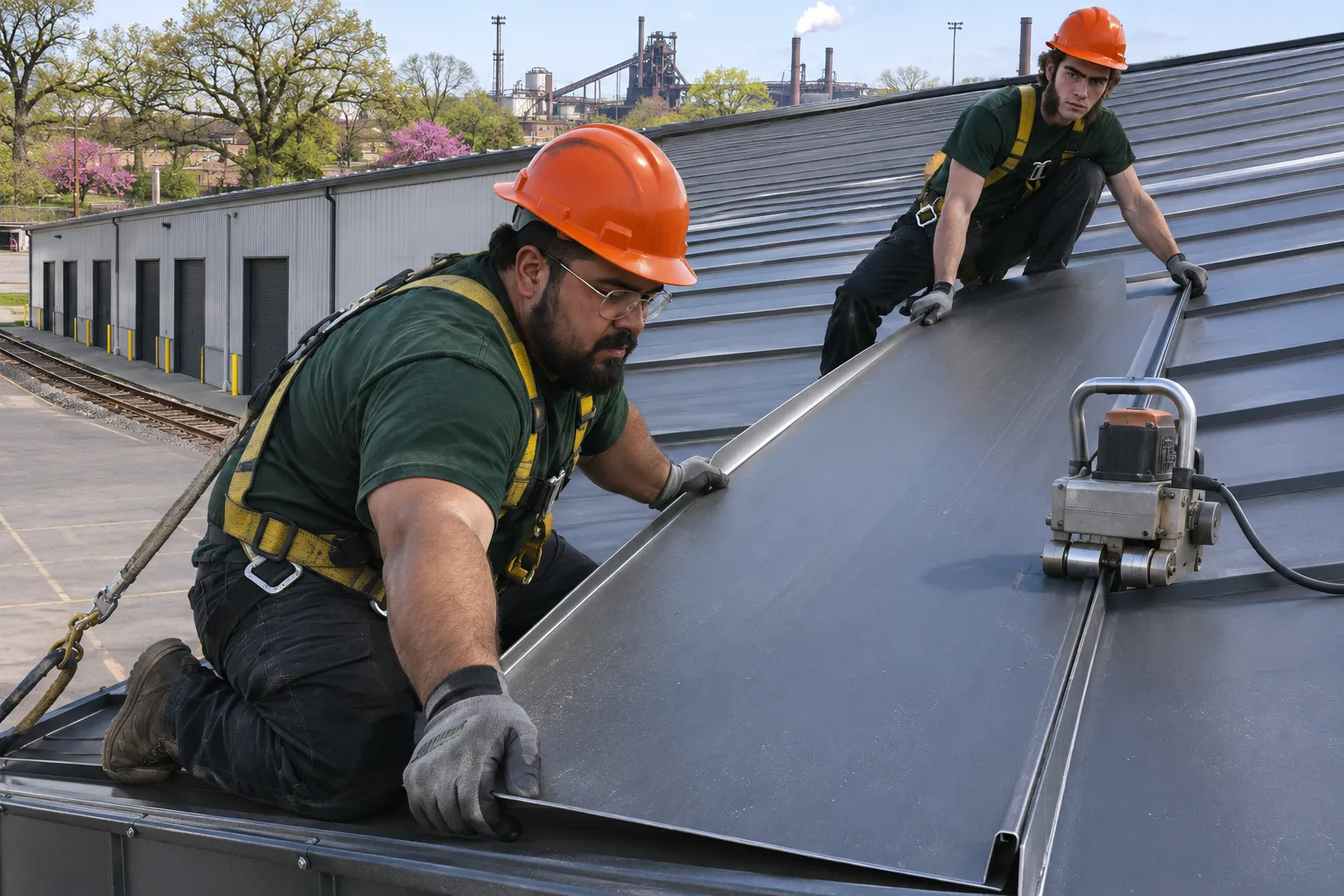
Metal panels for pitched shops, with walk zones marked over purlins.
Commercial Metal Roofing details →Call and tell us which unit was serviced last. Punctures near a curb or hatch are quick to find once we know where people walked.
Five stages built around the routes and equipment on the roof.
We note every hatch, unit, and fan, and follow the paths worn into the roof, coring the areas around the heaviest traffic.
The written scope shows walkway pad routes, support pads under equipment, and curb flashing heights alongside the membrane.
Units that need lifting or disconnecting are scheduled with the mechanical contractor before the section opens.
Sections are torn off, insulated, and covered daily, then pads go down as soon as each route is roofed.
The closing walk follows each service route, hatch to unit, checking pads, curbs, and drains.
Own buildings in more than one town? We take work in these as well; elsewhere, call us or send us a message.
Roof layers counted before choosing recover or tear-off.
Lake Station commercial roofing →Yes, on warehouses, plants, and shops. These roofs carry heavy equipment and steady service traffic, so walkway pads, curb flashing, and drainage are planned together, and tear-off is staged so work below continues. Core cuts at the start show where the deck needs work before new insulation goes down.
Along the routes people actually walk: hatch to units, unit to unit, and around service panels. We find those routes from wear marks and by asking your mechanical contractor, then pad them first. Pads also go around hatches and ladder landings, where dropped tools and parts do the most damage.
Ask for work on occupied industrial buildings, a written scope with pads and curb flashing, and proof of licensing and insurance. Make sure the roofer's plan names how units will be lifted or protected. A good plan also says how the roof stays dry each night while sections are open.
Thicker TPO or EPDM over a cover board handles traffic on flat sections, and metal works on pitched bays. Residue from any process gets tested against the membrane before we choose. Insulation and cover board thickness are set by how much weight and foot traffic the roof carries.
Usually, except when a curb is reflashed. We schedule short shutdowns with your mechanical contractor for each unit and keep the rest of the building running. Disconnects and reconnections are handled by your mechanical contractor, so warranties on the units stay intact.
At least twice a year, spring and fall, plus after heavy storms. Busy roofs also benefit from a quick look after major service work, when dropped parts and fresh scuffs are easy to spot.
Tell us how many units sit on the roof and how often they are serviced. We will map the routes and price the roof in writing.