Rubber Membrane That Stays Flexible Through Freeze And Thaw
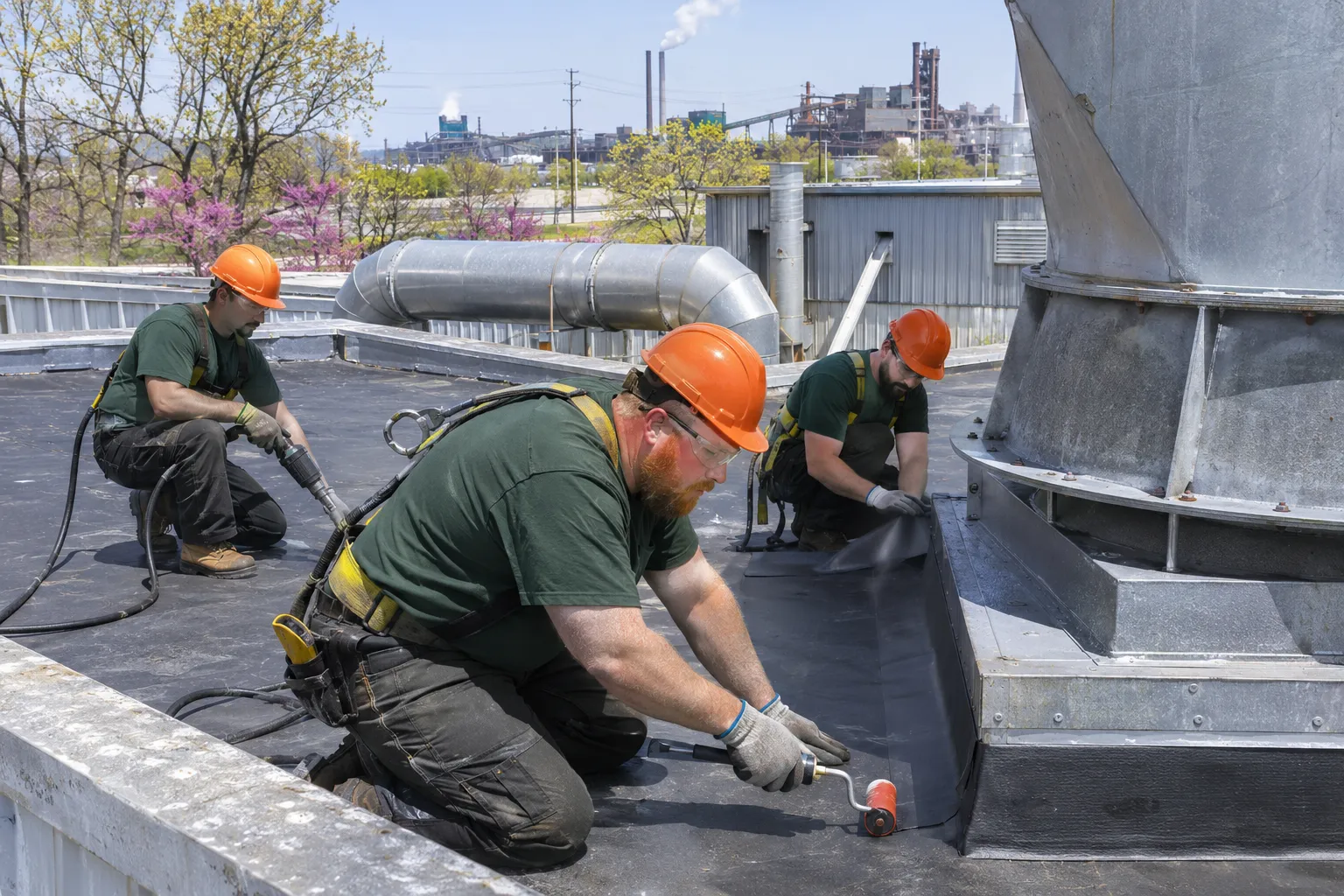
As a Portage EPDM roofing contractor, we install fully adhered and ballasted EPDM on low-slope commercial roofs, with taped seams and new flashing at every wall and curb.
Portage EPDM roofing suits low-slope roofs that face hard winters and need simple repairs later. Here is how we sort a fit from a roof that needs other work first.
EPDM Fits Well When
The roof sees long freezes and wants a membrane that stays flexible.
Many pipes and curbs call for a forgiving sheet that folds easily.
Owners want patches that go on with tape and primer years later.
A dark surface is fine for the space below.
The structure can carry ballast, or an adhered sheet is planned.
Plan Other Work First When
Old EPDM has shrunk and the insulation under it is wet.
Ballast would overload a deck rated for less weight.
Oils or grease from vents land on the roof every day.
A white roof is wanted to cut cooling load.
Seams on the current roof are glued and splitting everywhere.
Roof Symptoms
EPDM Roofing Problems on Portage Buildings
EPDM wears out at its edges and seams long before the middle of the sheet. These are the four failures we repair most.
SymptomLikely CauseWhat We Do
You See
Seams peeling open
Likely Cause
Glued seams on older roofs lose their bond after years of freeze and thaw, and water pries the lap apart.
What We Do
We clean and prime the lap, install seam tape and a cover strip, and check every other seam on that roof.
You See
Flashing pulled off the wall
Likely Cause
Shrinkage in the field sheet drags flashing away from parapets and curbs, leaving a gap at the base.
What We Do
We cut out the stretched flashing, set new EPDM flashing with termination bar, and seal the top edge.
You See
Drips at pipe penetrations
Likely Cause
Split or loose pipe boots that have hardened in the sun and pulled away from the pipe.
What We Do
Pre-molded boots replace the old ones, with clamps and lap sealant at the top.
You See
Puddles that stay for days
Likely Cause
Low spots from crushed insulation or a sagging deck, where standing water speeds seam wear.
What We Do
We map the low areas and build tapered insulation into the reroof so water reaches the drains.
System Choices
EPDM Roofing Options for Portage Warehouses
Attachment, thickness, and seam method decide how an EPDM roof holds up to lake wind and snow.
Fully Adhered Sheets
Glued to the cover board across the whole roof, this method resists wind uplift and handles crowded roofs with many penetrations.
Ballasted Sheets
Loose-laid rubber held down with stone goes on quickly, though it adds weight and makes leak tracing slower.
Seam Tape And Cover Strips
Factory-applied tape and primed laps replace the liquid adhesives used on older roofs, with a cover strip over each lap.
Sheet Thickness And Insulation
Heavier sheets last longer under foot traffic. Insulation thickness is set by the R-value the building needs.
What You Gain
EPDM Roofing for Portage Shops, Plants, And Storage
EPDM shines on buildings with tough winters, crowded penetrations, and owners who want repairs to stay simple.
Light Industrial Plants
Shops
Storage Buildings
Office Buildings
Flexible In Hard Freezes
Cold weather leaves rubber pliable, so the membrane rides through deck movement and freeze-thaw swings without cracking.
Easy Around Crowded Penetrations
Soft sheets fold around pipes, drains, and curbs, and pre-molded boots handle the round ones neatly.
Patches That Match
Punctures and torn spots take a primed patch of matching EPDM, so repairs years from now stay simple and quick.
Rubber Roof Seams Coming Apart?
Call and tell us how old the roof is and where water shows inside. Peeling laps get taped and covered once the seam is dry and primed.
Five stages carry an EPDM roof from the first core to the final seam check.
Step 1
Survey Moisture And Layers
Cores and a moisture survey show how much insulation is dry, how many layers are down, and whether the deck needs repair before anything new goes on.
Step 2
Choose Adhered Or Ballasted
Deck rating, wind exposure, and the number of penetrations decide the attachment. You get the choice in writing with the sheet thickness and insulation.
Step 3
Tear Off And Insulate
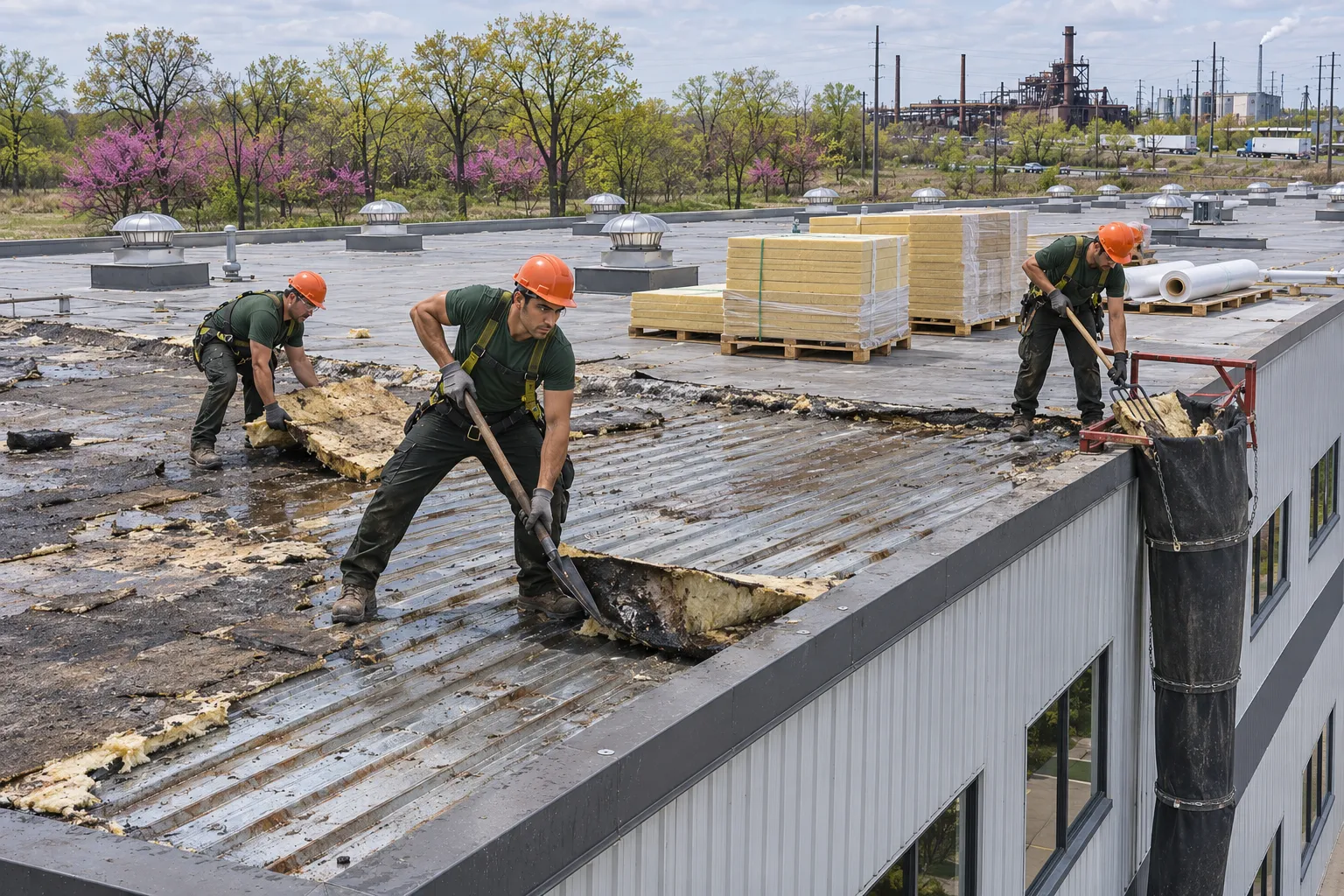
Old roofing comes off in sections sized to one day. Wet boards go, deck spots are repaired, and new insulation goes down tapered toward drains.
Step 4
Lay Rubber And Tape Seams
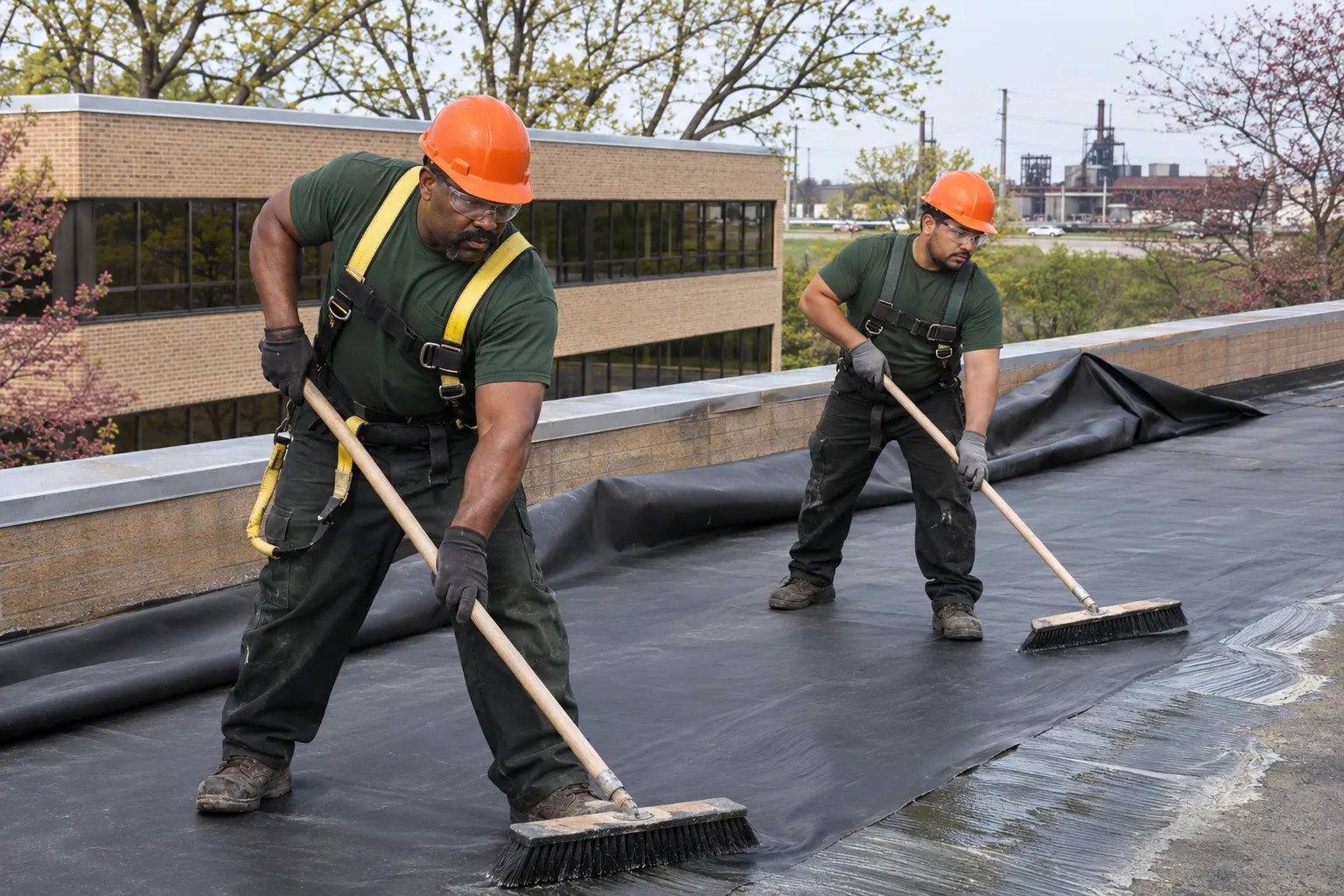
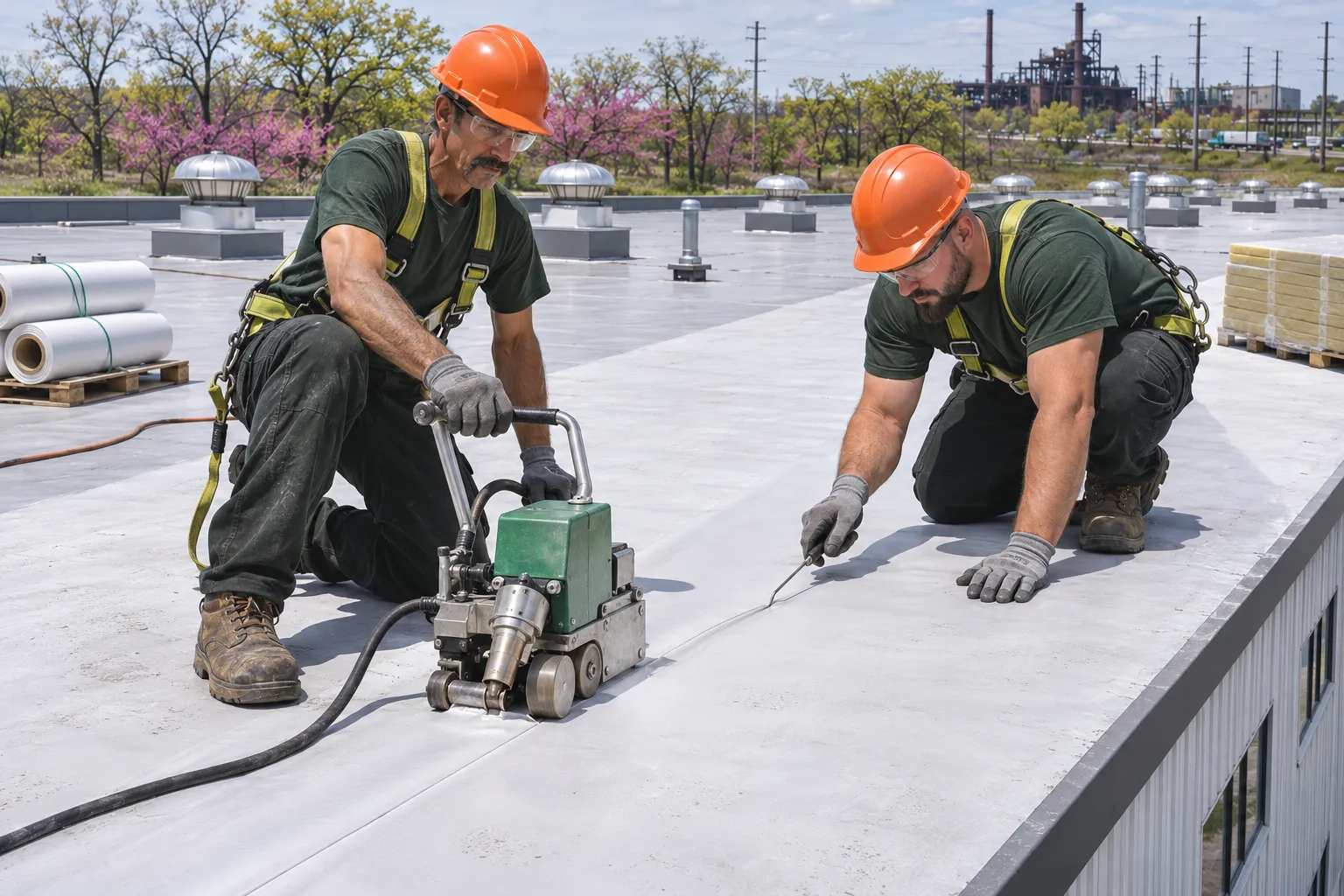
Sheets are adhered or laid loose, then every lap is primed, taped, and capped with a cover strip. Walls and curbs get fresh flashing with termination bar.
Step 5
Check Seams And Walk It
Each lap is checked by hand along its full length. The final walk with you covers boots, drains, edges, and the photos for your file.
EPDM roofs often reach 20 to 30 years. Thicker sheets, full adhesion, working drains, and regular seam checks push toward the long end. Around Portage, lake wind, snow, and freeze-thaw cycles test the seams and flashing first, so those details set the timeline.
What are the most common problems with EPDM roofs?
Seam separation, shrinkage that pulls flashing off walls and curbs, punctures, and leaks at pipe boots. Roofs with glued seams split most. We tape and cover failed laps, replace stretched flashing, and patch punctures with matching rubber.
Fully adhered vs ballasted EPDM: which fits a Portage building?
Fully adhered rubber is glued down, resists wind uplift, and handles crowded roofs. Ballasted rubber goes on faster under stone, adds weight, and slows leak tracing. Buildings exposed to lake wind usually get adhered sheets; ballast only goes where the structure is rated for it.
When does an EPDM roof replacement make more sense than repair?
Once seams fail in many places, the sheet has shrunk away from the walls, or a moisture survey finds wet insulation across large areas. At that point new EPDM or TPO goes on after the old layer comes off.
How does freeze and thaw damage a rubber roof?
Rubber handles the cold itself well. The damage comes from water that seeps into seams, boots, or flashing, freezes, and pries them wider each winter. We check those spots every spring and reseal them before the next freeze.
Can EPDM be repaired in winter?
Small repairs can, on dry, clean days with primers rated for the temperature. Seam tape and patches need a dry surface to bond, so wet or icy laps get a temporary seal and a full repair once conditions allow.
Hire a Portage EPDM Roofing Contractor
Send the address and the age of the roof if you know it. We will survey the moisture and price new EPDM in writing.