Soft, swollen membrane near exhaust
Oils and process residue settling on the roof and attacking a sheet that was never rated for them.
We test the residue, then replace that area with a membrane rated for it and add a cover board below.


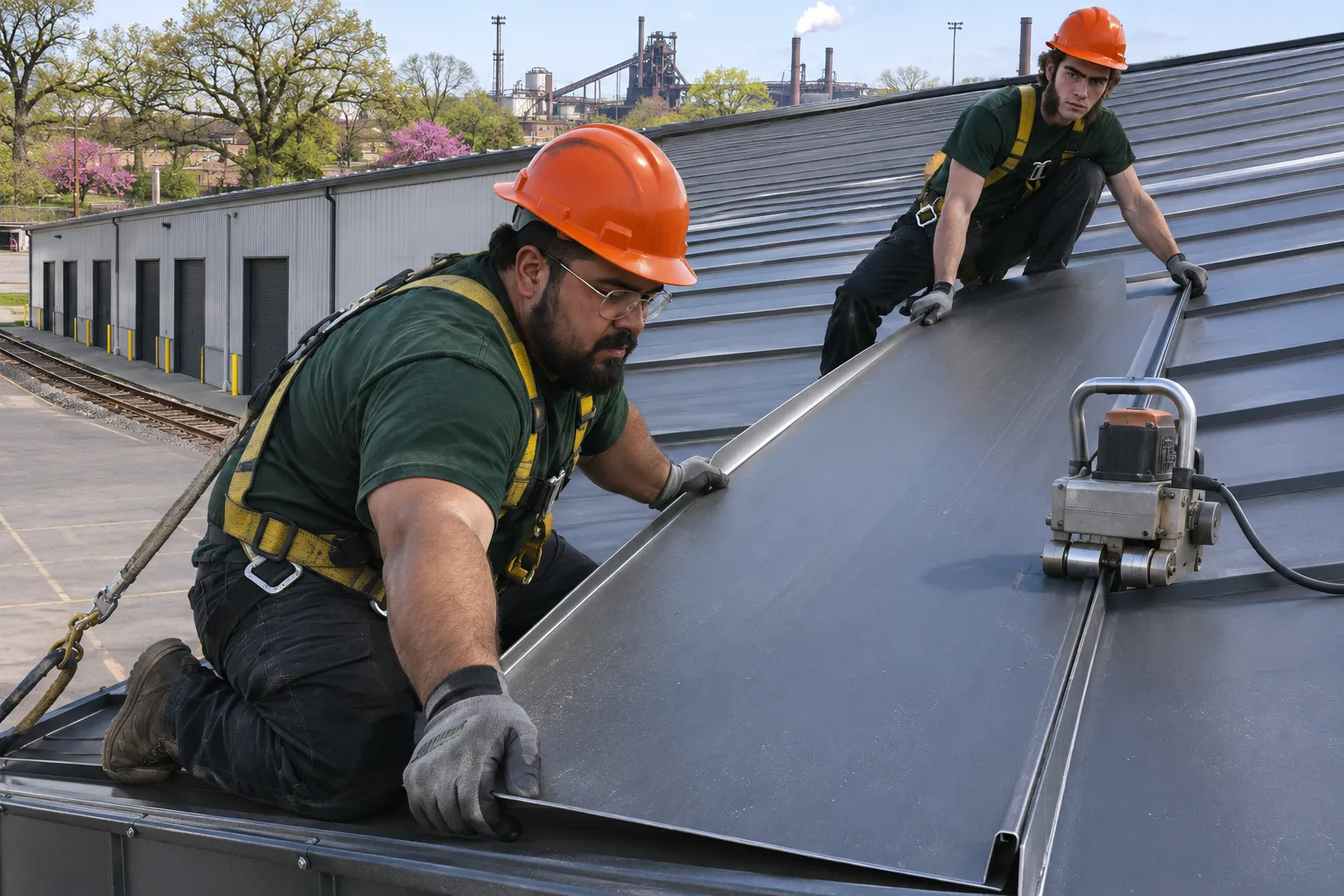
As a Portage industrial roofing contractor, we roof steel processing plants, warehouses, and production buildings in sections, so the work below keeps running.
Portage industrial roofing has to match what comes out of the plant and who walks on the roof. These lists show what we look for on the first visit.
Plant roofs fail where the process meets the roof: at stacks, curbs, and the paths crews walk every week.
Oils and process residue settling on the roof and attacking a sheet that was never rated for them.
We test the residue, then replace that area with a membrane rated for it and add a cover board below.
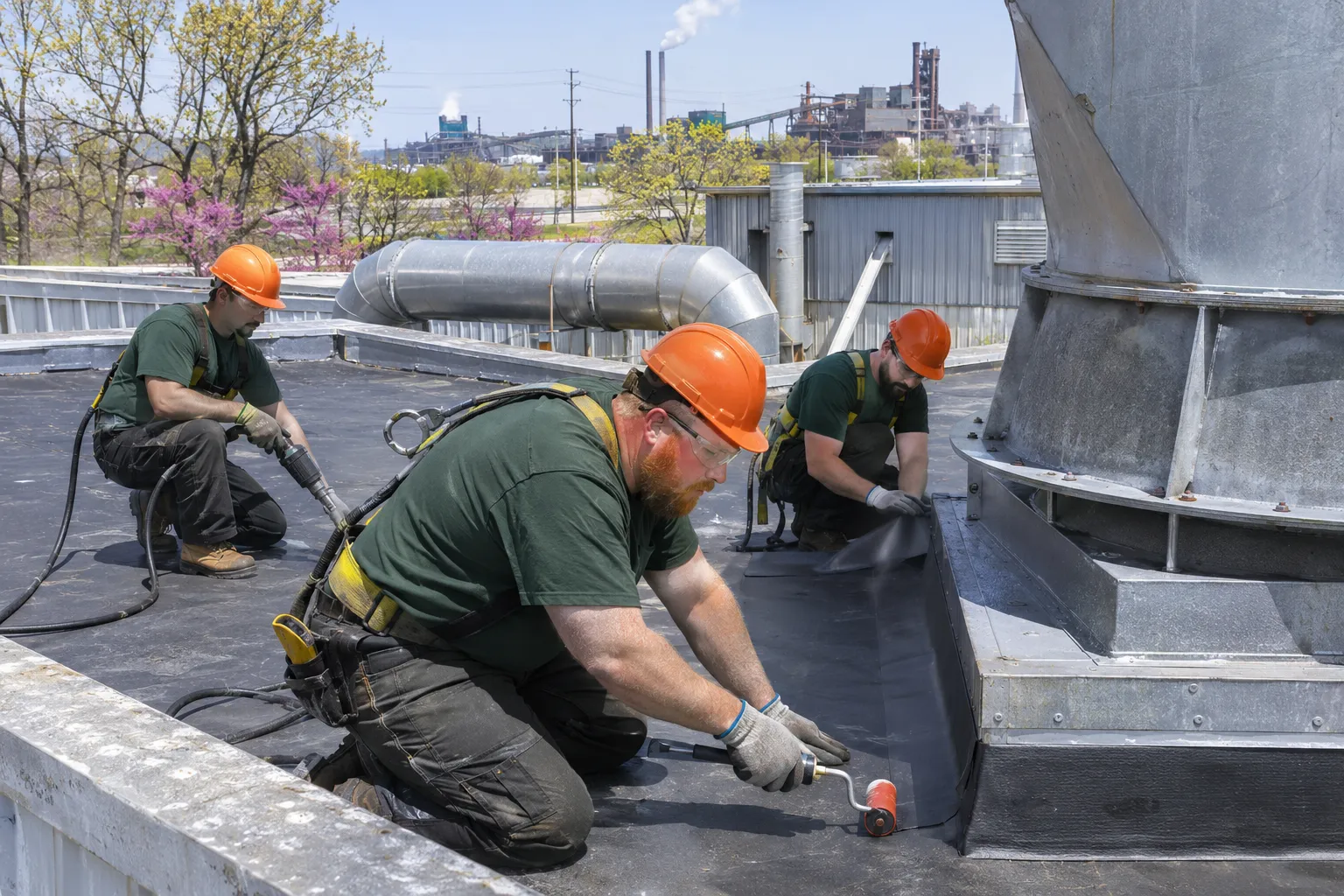
Short curb flashing, open inside corners, or units set down with no protection pad, cutting into the sheet.
Curbs get taller flashing and reworked corners, and supports go onto protective pads.
Technicians walking the same route to fans and units every week, grinding grit into the membrane.
Walkway pads go down along the real routes, and worn sheet underneath is patched or replaced.
Deck panels corroding from years of slow leaks and moist plant air rising from the process.
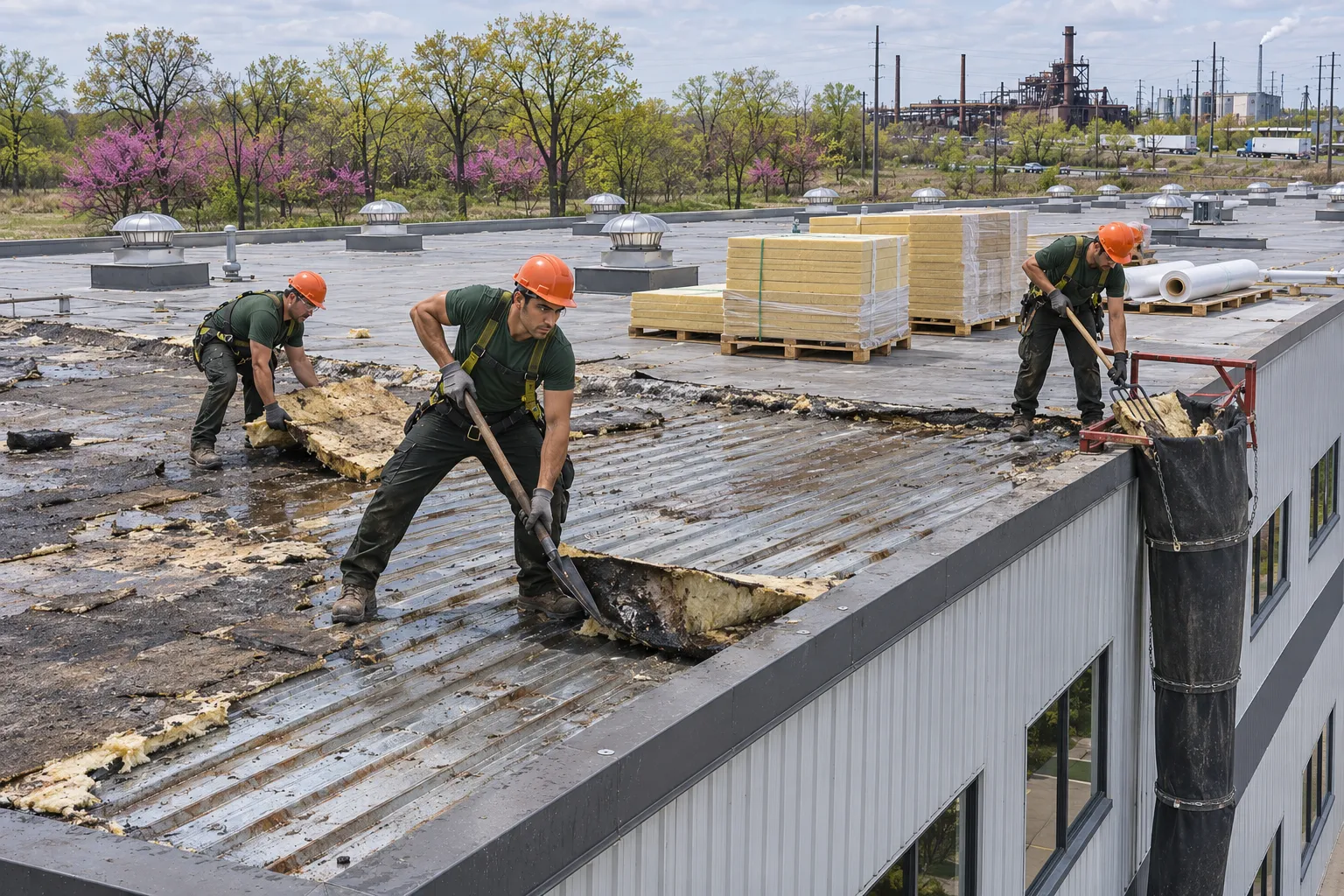
Core cuts locate the bad deck. We replace those panels during the tear-off before new insulation goes down.
The right materials depend on heat, dust, vibration, and residue coming off the process below.
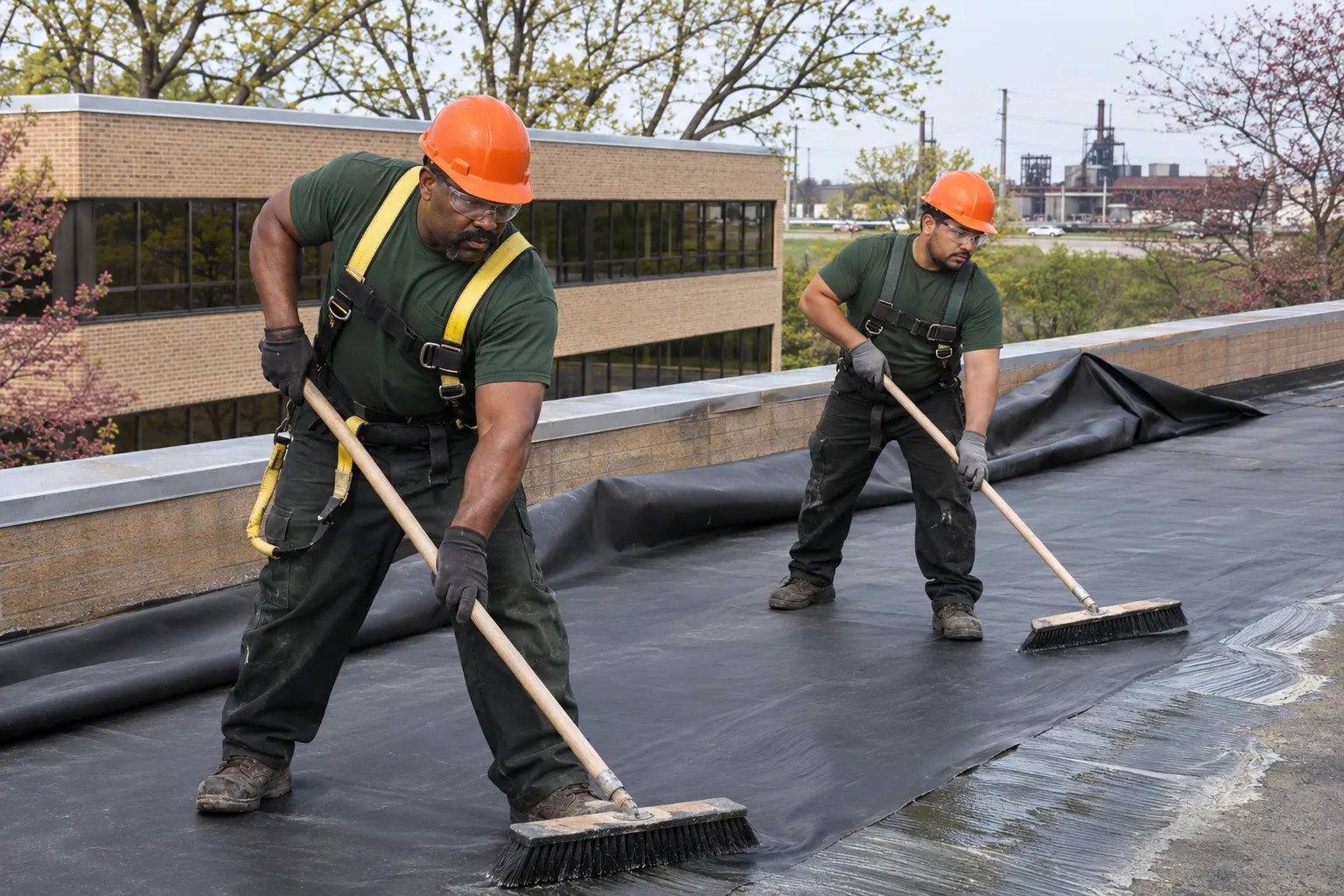
Heavier TPO or EPDM sheets take more traffic and weathering, and we match the formula to any oils or chemicals on the roof.
A high-density board over the insulation keeps carts, ladders, and boots from denting the roof and opening the sheet.
Metal panels suit pitched plant sections and buildings with heat or sparks near the roof surface.
Pads under equipment legs and along service routes spread the load and protect the membrane.
An industrial roof has to keep the line dry and stay out of the way of the people running it.
Sectioned tear-off, protection under openings, and noisy work set around shifts let the plant keep running while the roof is replaced.
Every curb, duct, conduit, and support gets its own flashing, so water stops showing up at the units technicians service.
Reflective membranes and added insulation lower roof temperature and the heat entering buildings that already run hot inside.
Call and tell us which bay or unit sits below the drip. That lets the roofer start at the right curb or stack.
Five stages run on every plant roof, set around shifts and the plant safety rules.
Cores, a moisture survey, and a walk of every curb and stack show where the deck is weak and which areas need full replacement.
Shutdown windows, crane lifts, and unit lifts get set with plant management and the mechanical contractor before the first section opens.
Each section is torn off, its deck repaired, and its insulation replaced, with protection hung under openings above equipment.
Membrane runs up each curb, pre-formed boots go on pipes, and supports go onto protective pads before the field is closed.
Walkway pads go down along service routes. The closing walk with plant staff covers every stack, curb, and drain.
Most plants carry more than one kind of roof. These systems cover the rest of the property.

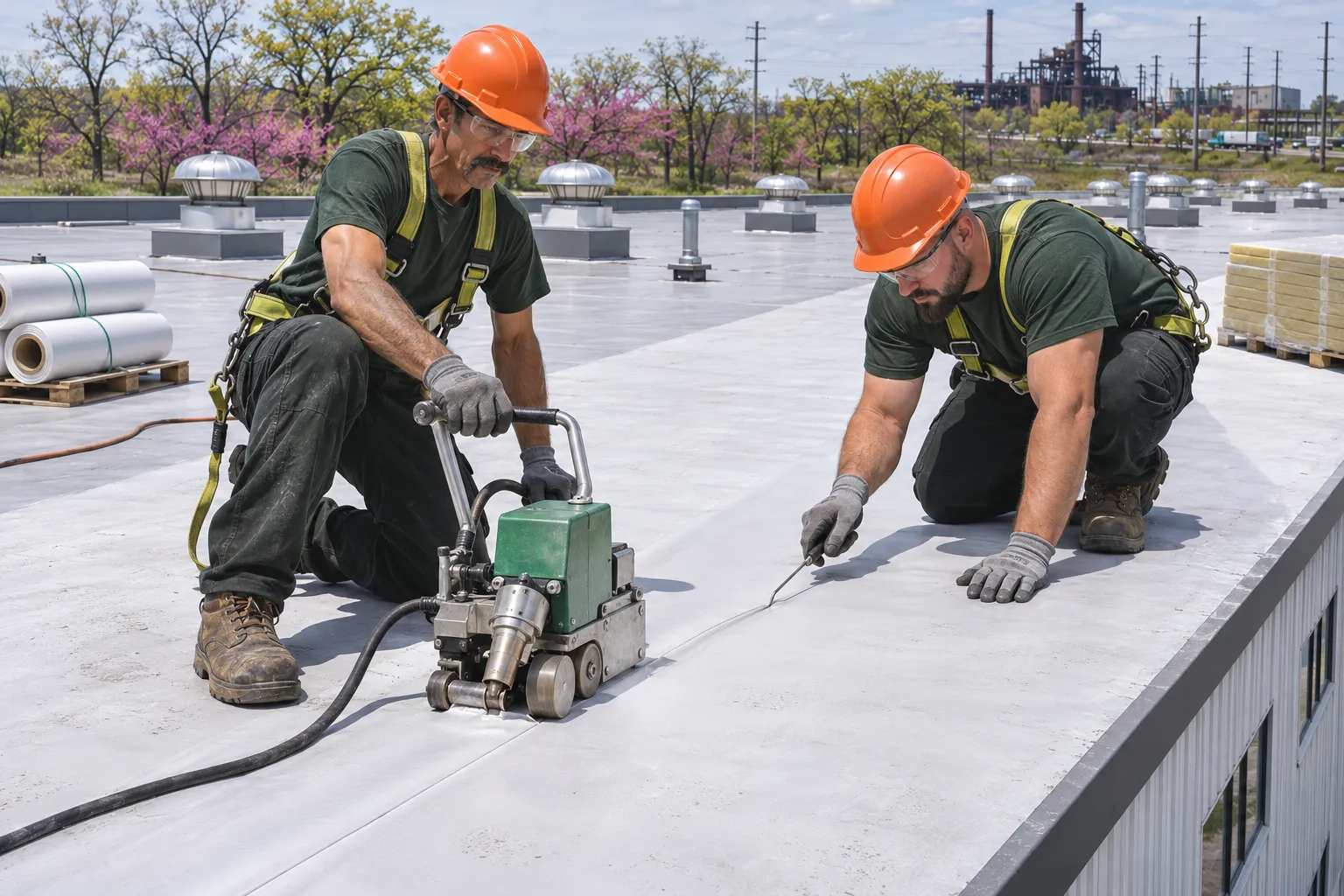
White welded membrane for office wings and warehouse roofs that sit beside the plant floor.
TPO Roofing in Portage →
Rubber sheets for storage buildings and low-slope additions with crowded pipe penetrations.
EPDM Roofing in Portage →
Standing-seam and exposed-fastener panels for pitched mill buildings and equipment sheds.
Commercial Metal Roofing in Portage →Roofs over steel processing need to handle heat, dust, vibration, and steady traffic. Heavy-gauge metal, thicker TPO or EPDM, and crush-resistant cover boards are the usual picks. We test residue from the process first, because oils and chemicals break down some membranes.
Each curb, duct, conduit, and support gets its own flashing. Membrane climbs every curb side, pipes get pre-formed boots, and supports sit on pads. Large units sometimes have to be lifted during a reroof, which we schedule with the mechanical contractor and plant management.
In sections. Each one is torn off, inspected, and closed before the crew leaves, with protection under openings and crane lifts set around shifts. Core cuts done ahead of time show where deck repair is needed.
Ask about work on occupied industrial buildings, safety training, insurance, and how they will phase around production. Get membrane thickness, insulation, stack and curb flashing, and walkway pads in writing, and confirm a City of Portage license and the manufacturer's approval for the system.
Dark roofs run far hotter than the air, which dries sealants and works seams and flashing through daily expansion. Reflective membranes and extra insulation keep roof temperature and heat gain down on buildings with heavy cooling loads.
Parts of it can. Mechanically fastened sheets and metal panels go on in cold weather, while adhesives and some primers need warmer, dry days. We sequence the work so cold-tolerant steps run in winter and adhesive work waits for spring.
Send the plant address and a note on the process below the roof. We will core the roof and plan the work around your shifts.